Guide to PVD Gold Coating for Daily Jewellery
That warm, polished gold finish on the huggies you never take off or the stackable ring you reach for every morning needs to do more than look beautiful. It needs to keep up. This guide to PVD gold coating explains why this finish has become a favourite for everyday jewellery that feels elevated, wears comfortably and holds on to its glow.
What is PVD gold coating?
PVD stands for Physical Vapour Deposition. It is a specialist coating process in which a material is turned into vapour in a controlled vacuum chamber, then bonded in a fine, even layer to the jewellery beneath it.
For gold-coloured jewellery, the result is a rich golden finish that is designed to adhere more strongly than the thin surface plating often found on lower-cost fashion jewellery. It gives pieces that polished, precious-looking glow without making them priced like solid gold.
The base metal still matters. At Moonix, 316L stainless steel provides a durable foundation for gold PVD pieces. It is valued for its strength, smooth finish and suitability for everyday accessories. Combined with a quality coating, it creates jewellery made for repeat wear - from a delicate clover necklace to a statement tennis bracelet.
PVD gold coating is not solid gold, and it should not be confused with gold vermeil. Solid gold is gold throughout, while vermeil is a thicker gold layer applied over sterling silver. PVD jewellery is a different category: practical, fashion-led and made to bring a golden finish to daily styling at a more accessible price.
Why PVD gold coating suits everyday jewellery
Ordinary gold plating can look lovely when new, but a very thin plated surface may wear unevenly over time. Friction from rings touching each other, contact with skincare and repeated exposure to water can all affect it. That is often when a piece begins to look dull or shows the colour of its base metal beneath.
PVD is chosen for greater durability. The coating is applied in a way that creates a close bond with the metal surface, giving jewellery better resistance to fading, scratching and tarnishing in normal day-to-day wear. This makes it especially appealing for the pieces that are meant to become part of your routine rather than stay in a jewellery box for best.
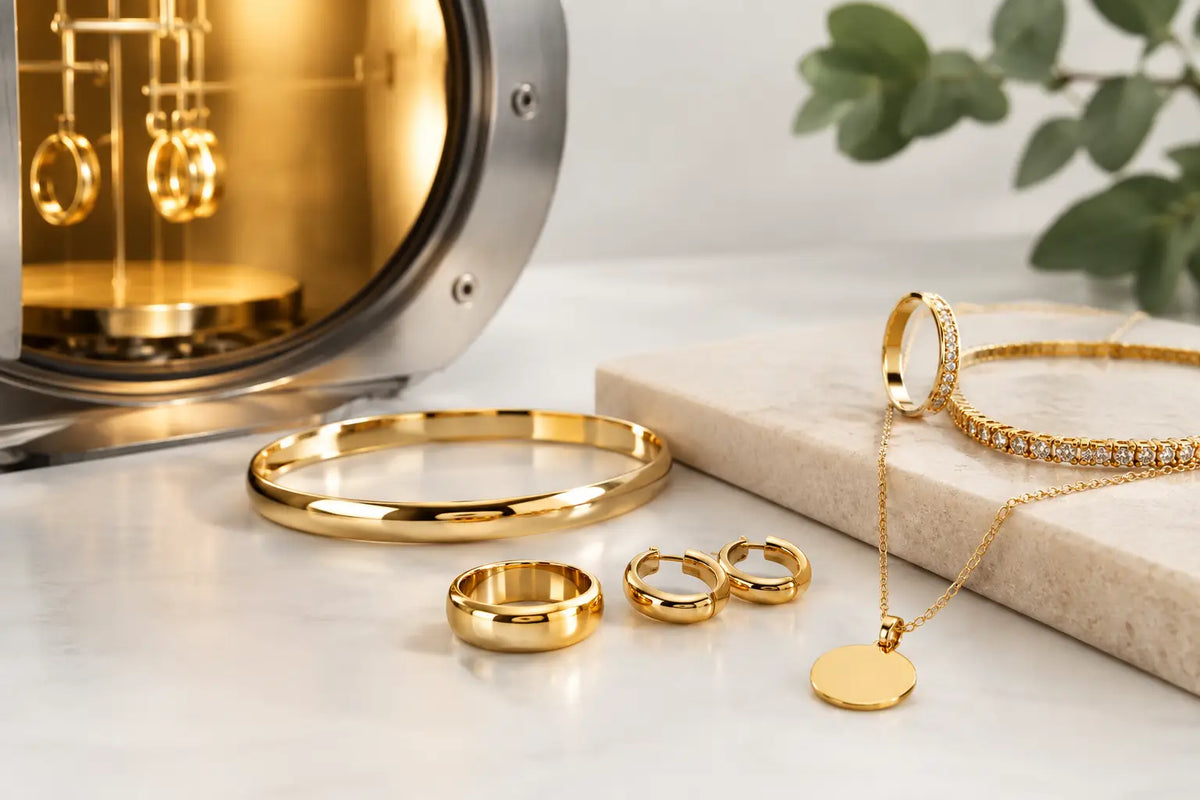
It is also a beautiful finish for modern gold tones. Depending on the exact coating and design, PVD gold can look bright and yellow, softly champagne-toned or deeper and more antique-inspired. The finish brings definition to polished curves, pavé-style zircon settings and small details such as petals, stars and clover motifs.
For anyone building a jewellery wardrobe, that longevity matters. You can pair a gold PVD huggie with a tennis stud, layer a fine pendant with a bolder chain, or stack open rings without treating each piece as too delicate to enjoy. The look stays refined, while the wearing experience remains low-maintenance.
Is PVD gold coating waterproof?
Gold PVD jewellery on stainless steel is often described as waterproof because it is designed to cope far better with everyday water exposure than conventional plated jewellery. Washing your hands, getting caught in the rain or wearing a necklace through a busy day should not require a second thought.
Still, waterproof does not mean indestructible. Chlorine in swimming pools, salt water, strong cleaning products and repeated hot-soap exposure can be hard on any jewellery finish over time. If you want your favourite gold pieces to stay luminous for as long as possible, take them off before a swim, a long soak or heavy cleaning.
The same considered approach applies to perfume, hairspray and body lotion. Put jewellery on last when getting ready, once sprays and creams have settled. This is less about making your collection difficult to wear and more about keeping the polished surface free from build-up.
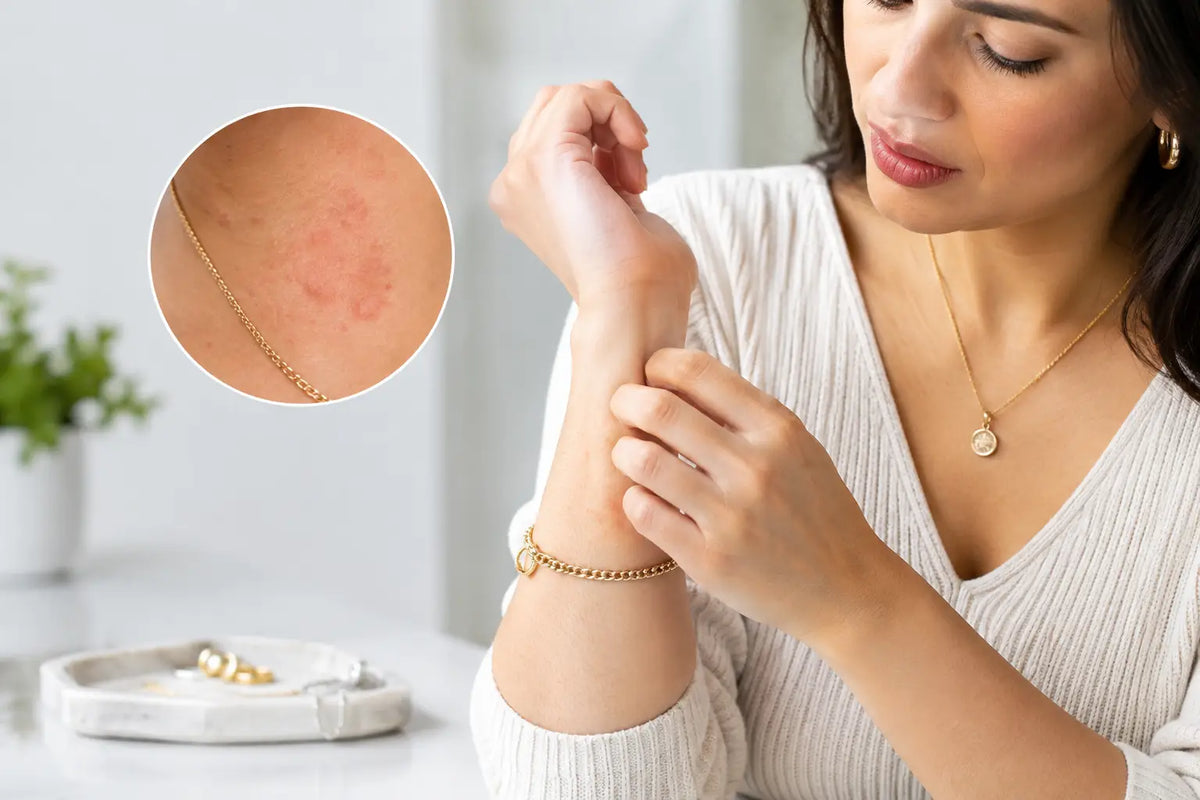
Is PVD gold coating good for sensitive skin?
It can be an excellent choice, especially when it is paired with skin-friendly base materials such as 316L stainless steel. Stainless steel is commonly used for jewellery because it is durable and does not need constant polishing or special storage. For many people, it is also a more comfortable alternative to inexpensive mixed-metal jewellery.
However, no finish can promise the same experience for every wearer. Sensitivity can depend on the metal beneath the coating, an individual's skin and whether a piece has become damaged through heavy wear. If you know you react easily to certain metals, look for clear nickel-free and hypoallergenic material information rather than relying on colour or price alone.
PVD coating is particularly useful here because it adds a smooth outer layer to the jewellery. When cared for well, it helps preserve the clean, polished feel that makes earrings, rings and necklaces easy to wear from morning to evening.
How long does PVD gold coating last?
There is no single timetable, because jewellery lives very different lives. A necklace worn over clothing may see very little friction, while a ring worn daily will meet hand sanitiser, taps, desks, bags and other rings. A bracelet can be exposed to more knocks than a pair of earrings. The amount of wear is as important as the coating itself.
A well-made PVD gold piece can retain its colour and shine for a long time with sensible care. It is generally a more durable option than standard plating, but it is not permanent. Constant abrasion will eventually affect any surface finish, including precious-metal finishes.
Choose designs with your habits in mind. Fine necklaces and earrings are often especially easy daily staples. For rings, adjustable styles can be helpful because a comfortable fit reduces rubbing and unnecessary pressure. If you love a fuller stack, mixing slim bands with one focal ring can also help each piece sit more comfortably.
Caring for gold PVD jewellery
The best care routine is refreshingly simple. After wearing your jewellery, wipe it gently with a soft, dry cloth to remove moisture, fingerprints and any trace of product. Store pieces separately when possible, so chains do not tangle and stones or metal edges do not rub against one another.
Avoid abrasive polishing cloths, harsh silver dips and household cleaners. These can wear down a coating rather than restore it. If a piece needs a little more attention, use lukewarm water with a small amount of mild soap, rinse carefully and dry it fully with a soft cloth.
There is no need to be overly precious with jewellery made for daily styling. The aim is simply to give it the same light care you would give a favourite handbag or pair of sunglasses. A few small habits protect the finish while leaving you free to wear your pieces often.
PVD gold coating versus ordinary gold plating
The key difference is the application process and the wear you can expect from it. Standard plating usually relies on an electroplated layer of gold or gold-coloured material. It can be an accessible option, but the layer may be thinner and more vulnerable to fading, especially on high-contact areas.
PVD uses a controlled deposition process to create a more resilient surface. That does not make every PVD piece identical - coating quality, base metal, thickness and workmanship all vary - but it is a strong choice when you want fashion jewellery that looks considered beyond its first few wears.
For daily jewellery, think of PVD as the balance point between appearance and practicality. You get the warmth and versatility of gold styling, paired with a finish that better suits real routines: office days, coffee runs, holidays, dinner plans and the ordinary moments when a little shine changes the whole outfit.
A gold finish should feel like an easy part of your signature, not something you save for an occasion. Choose the pieces that make you feel put together, wear them your way, and let a little thoughtful care keep their glow close for longer.