Best Jewellery for Sensitive Skin to Wear Daily
A pair of earrings should brighten your face, not leave your lobes hot, itchy or sore by lunchtime. The best jewellery for sensitive skin starts with the metal itself, but a few considered choices around fit, finish and care make just as much difference. When you know what to look for, you can build a polished jewellery wardrobe that feels as good as it looks.
What causes jewellery sensitivity?
Most reactions to jewellery are caused by nickel, a metal commonly used in alloys and lower-cost fashion jewellery. It can trigger contact dermatitis, which may show up as itching, redness, dryness, swelling or a dark mark where the piece has touched your skin. Earrings are often the first culprits because fresh or frequently irritated piercings are especially reactive.
The tricky part is that a piece can look gold or silver on the outside while containing a different mix of metals beneath the surface. Very thin plating may wear away over time, particularly on rings and bracelets exposed to handwashing, fragrance, body lotion and everyday friction. Once that base metal is exposed, a once-comfortable piece may begin to cause irritation.
Sensitivity is personal, too. A necklace that feels fine on one person may bother another after a warm day, a workout or a long holiday in the sun. Sweat, moisture and trapped product can make a mild reaction more noticeable. That is why material details matter more than a pretty finish alone.
Best jewellery for sensitive skin: materials to choose
For everyday style, 316L stainless steel is one of the most practical choices. Often called surgical-grade stainless steel, it is valued for its excellent resistance to corrosion, durable finish and skin-friendly qualities. It is also nickel-free in Moonix jewellery, giving sensitive-skin shoppers a clear alternative to unpredictable costume metals.
316L stainless steel suits the way real jewellery gets worn: in the shower, on busy workdays, during weekends away and through countless handwashes. Its waterproof, tarnish-resistant nature means less need to take pieces off and less worry that surface wear will change what sits against your skin. It brings a clean, lasting shine to delicate huggies, fine chains, tennis details and stackable rings without the fine-jewellery price point.
Titanium is another well-regarded option, particularly for piercing jewellery and people with very reactive skin. It is lightweight and highly corrosion-resistant, though its appearance can feel more minimal and its styles can be less varied in fashion-led collections.
Solid high-carat gold can work beautifully, but it is not an automatic answer for everyone. Gold is soft in its pure form, so it is blended with other metals for strength. The exact alloy matters, and some white gold contains nickel unless it is specifically made nickel-free. Solid gold is a considered investment, while 316L stainless steel offers a more accessible route to a polished daily rotation.
Sterling silver is loved for its soft, bright tone, but it is an alloy too. It usually contains copper, and it can tarnish or react with products and moisture. Many people wear it comfortably, but if you know your skin is particularly sensitive, look for a clearly stated hypoallergenic material rather than assuming every silver-toned piece will suit you.
Materials worth approaching carefully
Unspecified metal is the biggest warning sign. If a product description only says "alloy", "metal" or "gold-tone", there is no reliable way to know what is touching your skin. This does not mean every inexpensive piece will cause a reaction, but it does make buying a gamble.
Nickel-containing alloys, brass, copper and low-quality plated jewellery can be difficult for sensitive skin, especially when worn daily. The issue is not that these materials are inherently unattractive. It is that they may oxidise, discolour or transfer through worn plating, leaving sensitive skin with more exposure to potential irritants.
Choose designs that stay comfortable all day
The best material can still feel irritating if the fit is wrong. Jewellery should rest lightly rather than pinch, rub or trap moisture. Think about the places where you notice discomfort most, then choose your silhouettes accordingly.
For ears, smooth huggie earrings with secure, well-finished posts are a lovely starting point. They sit close to the lobe, work from morning coffee to evening plans and pair easily with a second stud or a slim ear cuff. If your piercings are prone to soreness, avoid sleeping in unfamiliar earrings and give newly pierced ears the time and jewellery recommended by your piercer.
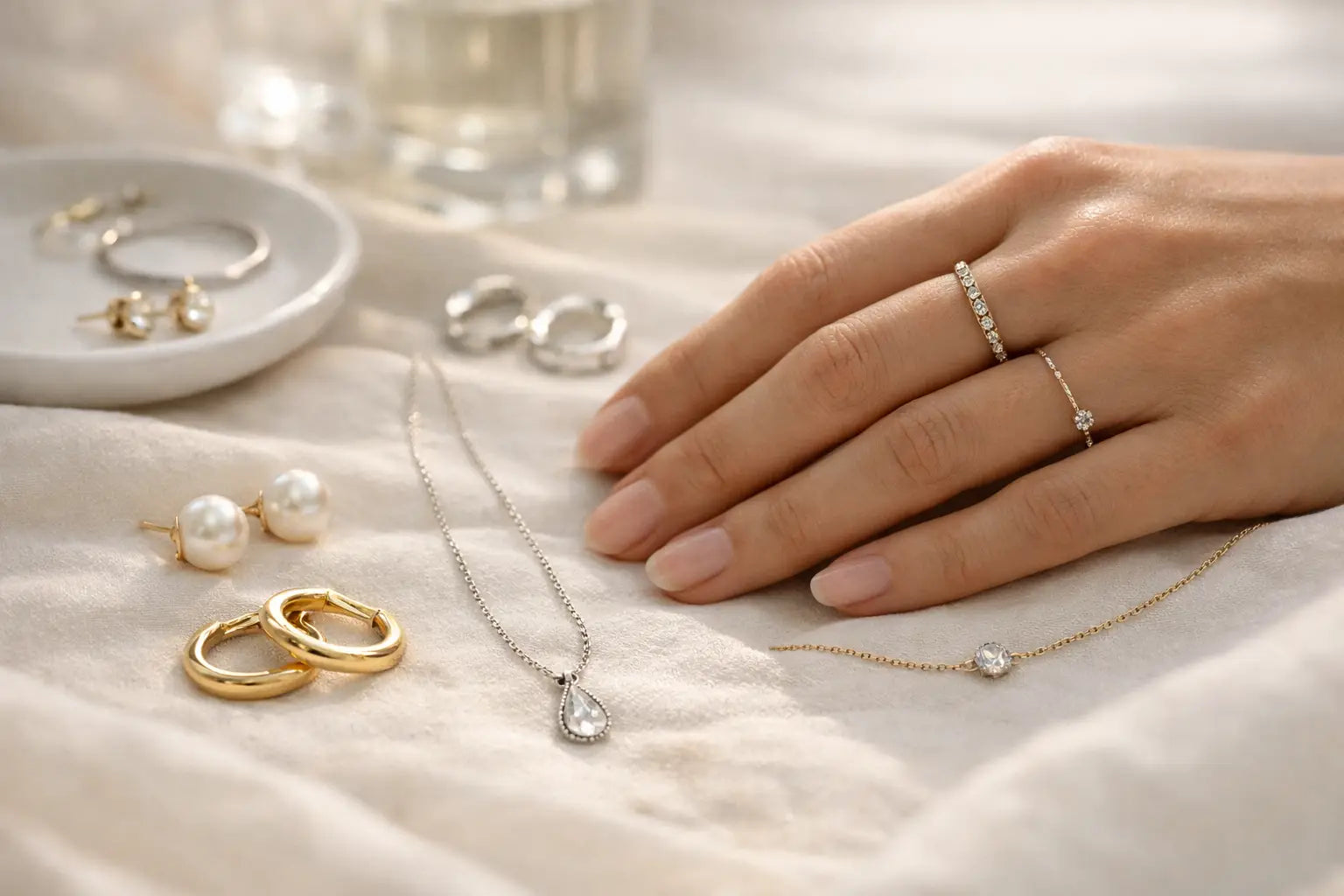
For hands, adjustable open rings offer a little flexibility when fingers swell in warm weather or after a long day. A fine Aurora Curve-style band can be worn alone for a quiet glint or layered with a slim baguette or pavé-inspired ring. The key is not to stack so tightly that the bands press into your skin. Two or three comfortable pieces look more refined than a crowded hand.
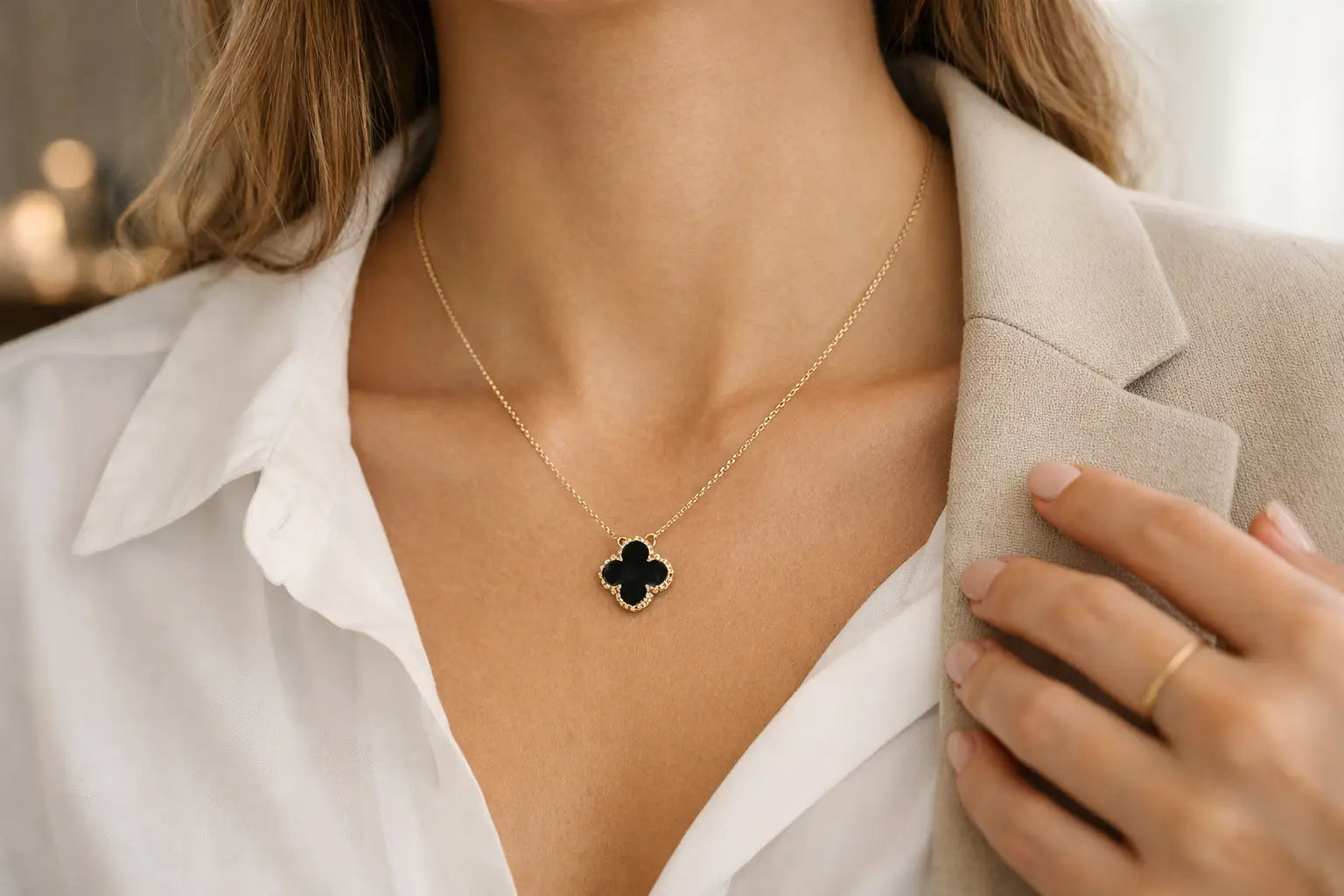
Necklaces benefit from a smooth chain and a pendant that lies flat. Clover motifs, petite pearls and floral details can add softness to a plain knit, shirt or square-neck top without feeling fussy. If the back of your neck is sensitive, keep an eye on clasps and extension chains, as these areas can collect hair products, perfume and sweat.
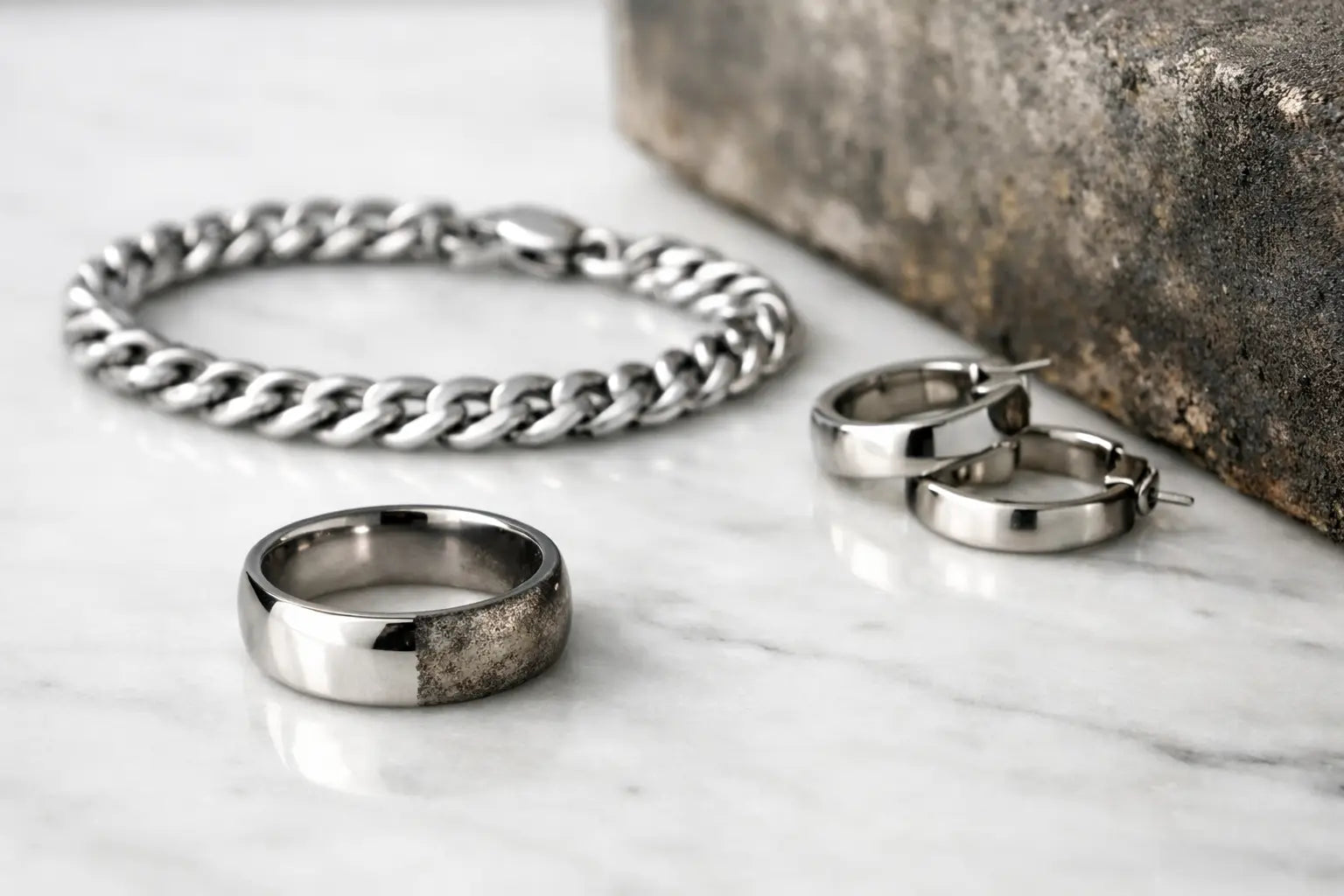
Bracelets should have enough movement to avoid rubbing the same point of your wrist all day. Tennis-inspired designs make an elegant evening choice, while a simple polished bangle or delicate chain gives daytime outfits a considered finish. If you type, write or train in your jewellery, a lower-profile style is often the more comfortable option.
How to spot a better everyday piece
A clear materials description is a good sign. Look for stated details such as 316L stainless steel, hypoallergenic construction and nickel-free composition rather than relying on terms like "sensitive skin friendly" alone. The more specific the information, the easier it is to choose with confidence.
Durability matters because sensitive skin and fragile finishes are not a happy pairing. Jewellery that resists tarnishing and water exposure is less likely to become patchy or worn-looking after regular use. A sustained shine also means your favourite pieces can stay in rotation rather than being saved for the rare occasion when you remember to put them on.
It is worth considering your own habits honestly. If you want to keep your jewellery on through showers, busy commutes and spontaneous plans, choose a waterproof material designed for that rhythm. If you enjoy switching pieces for dinner or a special event, you may be happy with more delicate options, as long as the metal is still suitable for your skin.
Caring for jewellery and sensitive skin
Even hypoallergenic jewellery deserves a little care. Rinse pieces occasionally with lukewarm water and a small amount of mild soap, then dry them thoroughly with a soft cloth. This helps remove sunscreen, make-up, fragrance, moisturiser and natural oils that can build up around posts, clasps and ring interiors.
Put jewellery on after applying perfume, hair spray and body products where possible. These products do not always cause a reaction by themselves, but residue can sit between the jewellery and your skin, particularly around earrings and necklaces. It is also wise to give skin a break if it is already irritated, rather than covering it with another pair of earrings.
If redness, swelling or itching persists after removing a piece, stop wearing it and speak to a pharmacist, GP or dermatologist. Jewellery sensitivity can overlap with other skin conditions, so it is better not to guess, especially if the area is painful or looks infected.
Build a sensitive-skin jewellery rotation you will actually wear
Start with a small collection that works together: a pair of polished huggies, a simple chain necklace, one adjustable ring and a bracelet you can wear without thinking. Choose a gold-tone or silver-tone base first, then add contrast through zircon sparkle, a pearl detail or a sculptural open shape. Coordinated pieces make daily styling feel easy, whether you are dressing for the office, brunch or an evening out.
A reliable material lets you enjoy the fun part of jewellery again: choosing the petal-shaped stud that softens a blazer, the clover necklace that catches the light over a T-shirt, or the tennis bracelet that makes an ordinary dinner feel a little more special. Skin-friendly jewellery is not about limiting your style. It is about choosing pieces that earn their place in your everyday.