Can Jewellery Cause Skin Rashes? Causes and Care
A new ring should brighten your daily styling, not leave an itchy red mark behind. So, can jewellery cause skin rashes? Yes - but the jewellery itself is not always the whole story. The metal mix, plating quality, skincare products, trapped moisture and even the fit of a piece can all play a part.
For anyone who has stopped wearing a favourite pair of hoops or tucked away a necklace after irritation, the good news is that a few thoughtful changes can make everyday jewellery far more comfortable. The aim is not to avoid shine or stackable styling. It is to choose pieces and habits that are kinder to your skin.
Can jewellery cause skin rashes? The common reasons
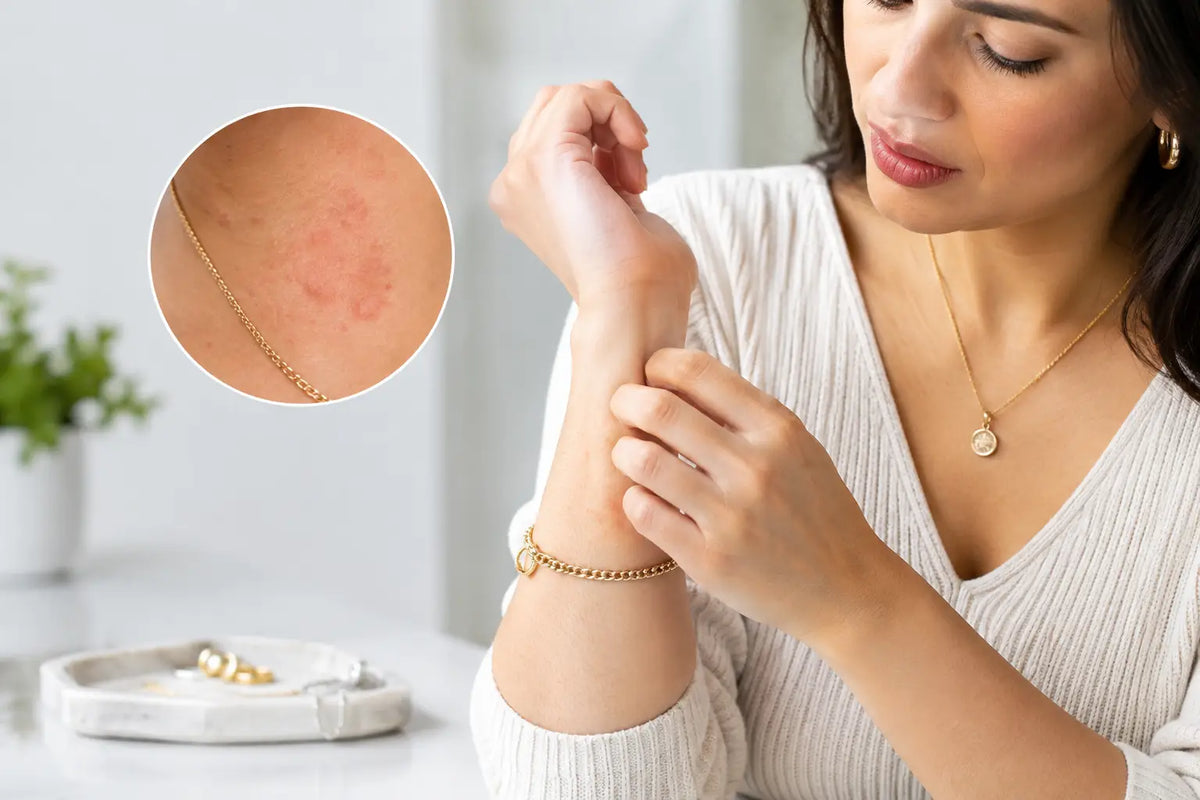
A jewellery-related rash often appears where the piece sits against the skin: under a ring, along a necklace chain, behind an earring or beneath a bracelet clasp. It may look red, dry, bumpy or flaky, and can feel itchy, sore or warm. The timing offers a useful clue. A reaction that develops after repeated wear may point to contact allergy, while a rash after a hot day, gym session or shower may be caused by moisture and friction.
Metal sensitivity and nickel exposure
Nickel is one of the most common triggers for jewellery contact dermatitis. It can be found in some costume jewellery, base metals and lower-quality plated pieces. When the surface coating wears away, the metal underneath has more direct contact with your skin, which may explain why an item that once felt fine suddenly becomes irritating.
Sensitivity varies widely. One person may wear a certain alloy without issue for years, while another reacts after only a short time. If you already know that nickel does not suit your skin, look for jewellery that clearly states it is nickel-free rather than relying on a vague label such as “silver tone” or “gold tone”.
Plating that has worn down
Affordable fashion jewellery can be beautifully finished, but thin or poorly applied plating has a limited life. Repeated contact with water, perfume, lotions and natural skin oils can dull the finish and expose the base metal beneath. This is particularly noticeable on rings, where handwashing and sanitiser are part of everyday life.
A durable material matters if you like jewellery you can wear on repeat. Stainless steel is valued for its resistance to tarnishing and its ability to hold up well to daily wear. Still, no material label replaces checking the product details, especially if your skin is highly reactive.
Sweat, soap and product build-up
Not every rash is an allergy. A snug ring can trap water, hand cream and soap beneath it, leaving the skin soft, irritated and prone to a red ring-shaped patch. Earrings can collect hair product, dry shampoo and skincare. Necklaces sit against perfume, SPF and perspiration, particularly in warmer weather or during exercise.
This is irritation rather than necessarily a metal reaction, and it is often easier to resolve. Remove the piece for washing, dry your skin properly and give the area a short break before wearing it again.
Friction, pressure and an imperfect fit
An open ring may feel comfortable at first, then pinch if adjusted too tightly. Heavy earrings can tug at a piercing, while a close-fitting choker or bracelet can rub during a busy day. Skin that is already dry, freshly shaved or affected by eczema is more vulnerable to friction.
Fit is a small detail with a noticeable effect. Choose adjustable styles that sit comfortably rather than tightly, and save heavier statement pieces for shorter wear if your ears or neck are easily irritated.
How to tell if it is a jewellery reaction
The location is usually the strongest clue. If irritation matches the shape of a ring, the clasp of a chain or the back of an earring, jewellery may be involved. It can help to stop wearing that item until the skin has settled, then note whether the rash returns when you wear it again.
However, do not assume every patch of redness comes from your accessories. New laundry detergent, a fragrance, nail products, hair dye and skincare can all cause contact irritation too. An earlobe rash, for example, may be linked to hair spray or shampoo residue rather than the earring itself.
If a rash is painful, blistered, spreading, weeping, infected-looking or persistent, speak to a pharmacist, GP or dermatologist. Seek urgent medical advice if you have swelling of the face or lips, breathing difficulty or a severe widespread reaction. Jewellery advice is useful, but it is not a substitute for medical care.
Choosing jewellery that is gentler on sensitive skin
The best choice depends on what triggers you. If nickel is the concern, nickel-free jewellery is the clearest starting point. If you react to plated pieces after a few wears, prioritise materials designed for lasting contact with water and skin, rather than a delicate finish over an unknown base metal.
316L stainless steel is a popular everyday option because it is hard-wearing, tarnish-resistant and commonly used for skin-friendly jewellery. Quality matters here: always read the retailer’s material information and be realistic about your own sensitivity. “Hypoallergenic” means a material is less likely to cause a reaction for many people; it is not a personal guarantee for every skin type.
For fresh piercings, follow the advice of your piercer or healthcare professional. A fashion earring, even one made with considered materials, is not automatically suitable for healing piercings. Wait until the piercing is fully healed before experimenting with new styles.
At Moonix, everyday pieces are designed around 316L stainless steel and 5A zircon, with nickel-free, waterproof and hypoallergenic wear in mind. That makes a practical foundation for a jewellery rotation that includes huggies, fine chains and rings you want to reach for often, not reserve for one evening out.
Small care habits that make a difference
Skin-friendly jewellery still benefits from a little care. The most useful habit is to put jewellery on after perfume, body lotion, SPF and hair products have dried. This reduces residue on the metal and avoids trapping product against your skin.
After swimming, exercising or a particularly warm day, rinse or wipe your jewellery according to its care guidance and dry it with a soft cloth. Clean skin matters just as much. Take rings off when washing your hands if soap tends to collect underneath, then make sure both your fingers and the ring are dry before putting it back on.
Avoid wearing the same item continuously if you notice early irritation. Rotate your favourites, especially rings and earrings that sit in one place all day. A pause of a few days is often kinder than trying to push through discomfort and creating a more inflamed patch of skin.
Store pieces separately when possible, so clasps and edges do not scratch their surface. Scratches do not always cause rashes, but they can make coatings wear unevenly and leave jewellery looking less polished over time.
What to do when a rash appears
First, remove the jewellery and gently cleanse the area with lukewarm water and a mild, fragrance-free wash. Pat dry rather than rubbing. Avoid adding new scented creams, perfumes or exfoliants while the skin is unsettled, as these can make irritation harder to identify.
Let the skin fully recover before testing a different piece. When you do return to jewellery, start with a clean, well-made item in a material you trust and wear it for a shorter period. If the reaction returns repeatedly with the same metal or style, stop wearing it and consider professional advice or patch testing for contact allergies.
Your jewellery should feel as easy as it looks: a little daily glow, a favourite stack, and no urge to scratch halfway through the day. Choosing considered materials, a comfortable fit and simple care lets your pieces stay part of your routine for all the right reasons.