PVD Jewellery Care for Lasting Everyday Shine
Your favourite huggies should look just as polished with a knit and trainers as they do after dark. That is the appeal of PVD jewellery care: it is refreshingly low effort, but a few considered habits help your everyday pieces keep their rich colour and smooth, light-catching finish for longer.
PVD-coated jewellery is made for real life. It can handle the hand washing, the unexpected rain shower and the busy mornings when you put your rings on before leaving the house. Still, waterproof does not mean completely unaffected by everything it meets. Perfume, skincare residue and the minerals left behind by water can gradually dull any jewellery if they are allowed to build up.
The good news is that keeping your pieces beautiful does not require a polishing kit or a complicated routine. Gentle cleaning and thoughtful storage are usually all it takes.
What PVD coating does for everyday jewellery
PVD stands for Physical Vapour Deposition. It is a process that bonds colour to the metal in a fine, durable layer, rather than applying a traditional surface plating that may wear quickly. On 316L stainless steel, it creates a polished finish with excellent resistance to tarnishing and daily moisture.
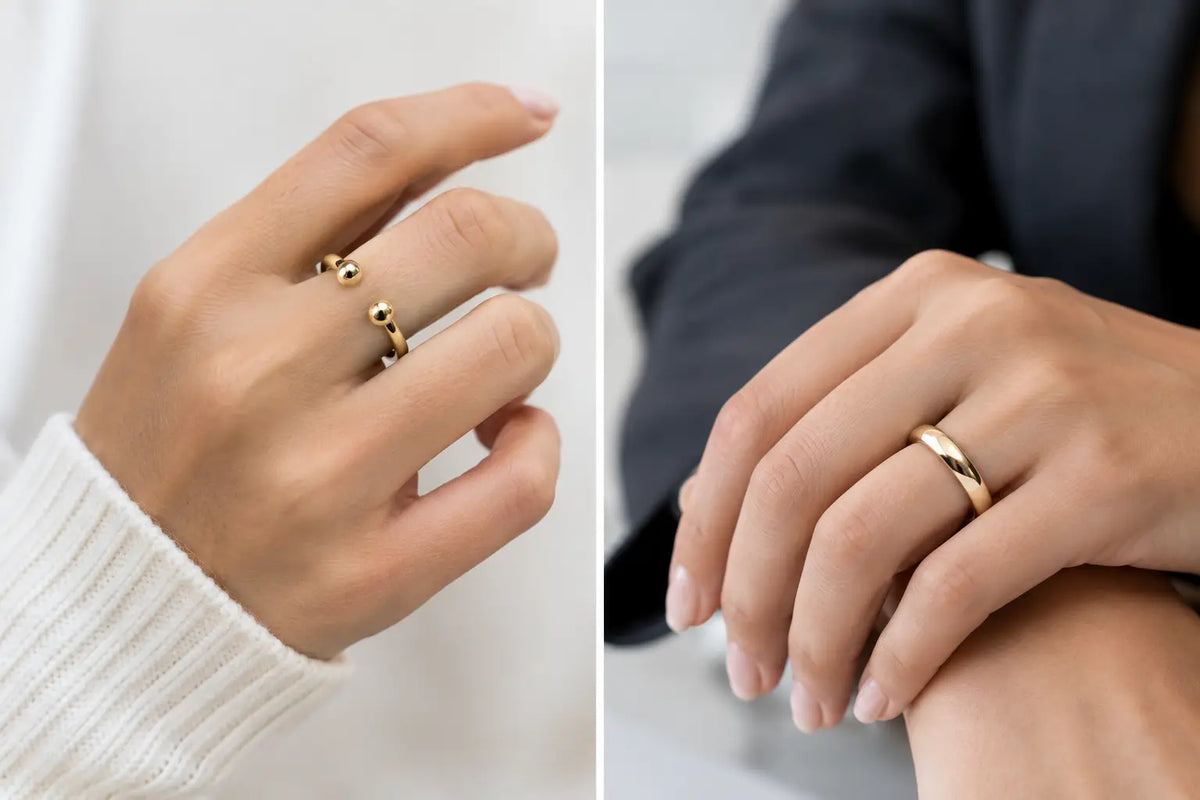
That makes PVD a lovely choice for gold-tone jewellery you plan to wear often. A stack of open rings, a tennis necklace or a pair of floral studs can feel elevated without needing the level of caution associated with fine jewellery. The stainless steel base is also hypoallergenic and nickel-free, which is especially welcome if your skin tends to react to lower-quality fashion jewellery.
There is a useful distinction to make, though. PVD is durable, not indestructible. Repeated friction, harsh chemicals and abrasive cleaning can affect the finish over time. Think of it as a dependable daily staple that deserves the same quick care you give your favourite sunglasses or handbag.
PVD jewellery care: the everyday routine
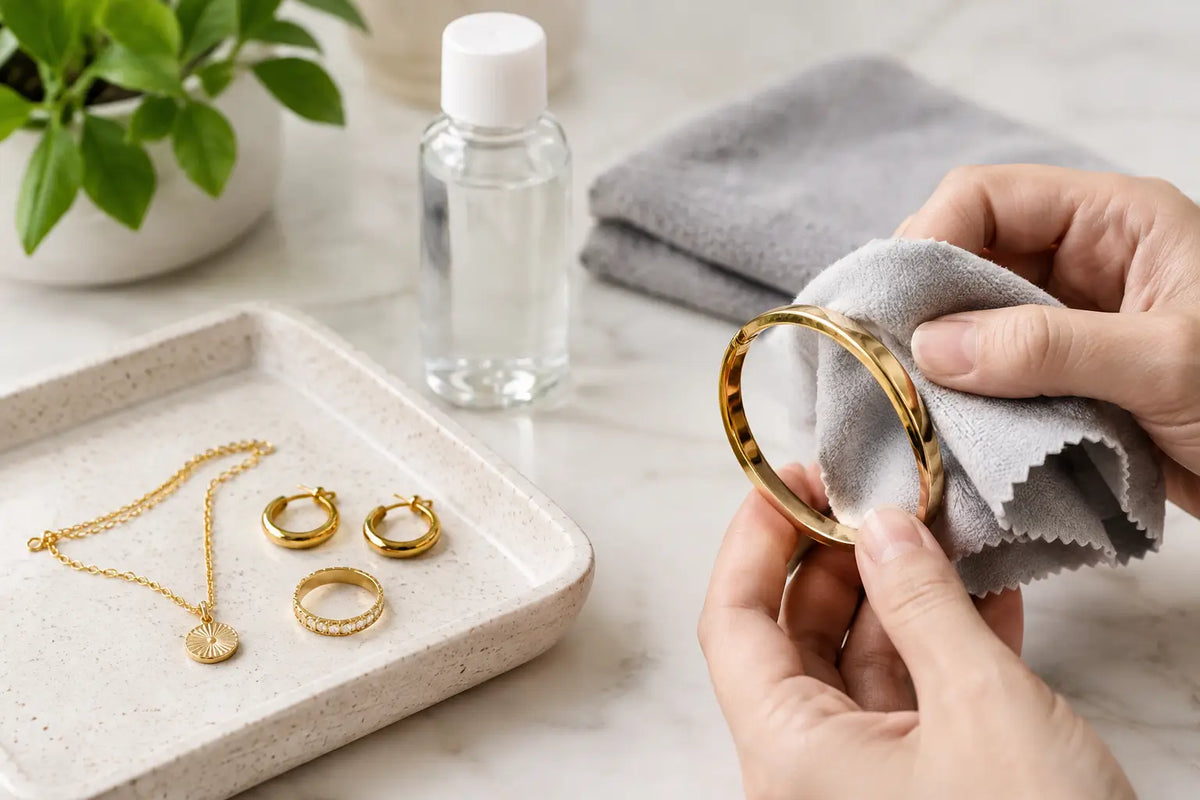
After wearing your jewellery, give it a soft wipe with a clean, dry microfibre cloth. This takes seconds, but removes fingerprints, skin oils and traces of moisturiser before they settle on the surface. It is particularly helpful for smooth gold-tone bangles, signet-inspired rings and larger pendant surfaces where smudges are more visible.
If a piece needs more than a quick polish, use lukewarm water with a small amount of mild soap. Let the jewellery sit briefly, then wipe gently with a soft cloth or a very soft brush. Rinse well and dry it completely before putting it away. Do not leave jewellery to air-dry around the clasp, stone settings or adjustable sections, as lingering moisture can collect in tiny details.
For pieces with 5A zircon or pearl details, be a little more precise. Use a damp cloth rather than soaking for a long time, and avoid pressing hard around the stones. A soft touch keeps the setting clean without introducing unnecessary friction.
You do not need to clean every piece after every wear. If you have worn a necklace for a few quiet hours, a dry wipe is enough. If you have had a warm day, applied lots of body lotion or worn your jewellery to the gym, give it a gentle clean once you are home.
Put jewellery on last
The simplest habit is also one of the most effective: apply perfume, hairspray, SPF, foundation and body lotion before putting on your jewellery. These products are not always harsh, but their oils and alcohols can leave a film that makes gold-tone finishes appear less bright.
Let your skincare settle for a minute, then add your earrings, necklace and rings as the final part of getting ready. At the end of the day, take jewellery off before cleansing your face or applying richer evening creams. It keeps your pieces clean and makes your getting-ready routine feel a little more intentional.
Water is fine, but rinse after stronger exposure
PVD-coated stainless steel is well suited to everyday water exposure, so there is no need to panic if you wash your hands or get caught in the rain wearing your rings. For many people, that easy wear is exactly why PVD jewellery earns a place in their daily rotation.
Chlorinated pools, hot tubs and the sea are different. Chlorine, salt and suncream can leave deposits on the surface, while hot water may encourage residue from shampoo or body wash to cling to the jewellery. If you keep a piece on during a swim, rinse it in fresh water afterwards and dry it carefully. If you want to be extra cautious with your most-worn gold-tone favourites, remove them before getting in.
The same applies to cleaning products. Take rings and bracelets off before using bleach, strong bathroom spray or washing-up liquid for a deep kitchen clean. Gloves are helpful, but removing the jewellery is the safer choice when you know your hands will be in contact with chemicals for a while.
What to avoid when cleaning PVD jewellery
A bright finish does not need aggressive polishing. In fact, the products designed to buff scratches from solid silver or gold are often too abrasive for coated jewellery. Skip polishing pastes, rough cloths, toothpaste, bicarbonate of soda and ultrasonic cleaners unless the care guidance for your specific piece says otherwise.
Avoid leaving jewellery in a cleaning solution overnight. More time does not equal more shine. Gentle, brief cleaning is better for both the PVD finish and decorative elements such as zircons, pearls and delicate clover motifs.
It is also worth taking off rings before weight training, gardening or any task where they may knock against hard surfaces. PVD resists everyday wear beautifully, but repeated impact can create scratches. Stackable rings are designed to be styled together, yet a little movement between bands is natural. Rotate your stacks now and then if one ring gets more contact than the others.
Store each piece with a little space
The way you store jewellery matters almost as much as how you clean it. Tossing necklaces, earrings and rings into one drawer may be quick, but it increases tangling and surface friction. A soft-lined box, small pouch or divided organiser gives each piece room to rest.
Fasten necklace clasps before storing them to prevent chains from knotting. Keep earrings paired together, and place rings side by side rather than piled on top of one another. If you are travelling, wrap favourite pieces separately in a soft pouch or cloth so they do not rub together in your wash bag.
A cool, dry place is ideal. Bathrooms can be convenient, but steam and humidity are not the best long-term environment for jewellery. A bedroom drawer or dressing-table organiser is the better home for pieces you wear on repeat.
When a piece needs a little extra attention
If your jewellery looks less bright than usual, it is often residue rather than damage. Start with a lukewarm, mild-soap clean and a proper dry using a microfibre cloth. Check around clasps, behind pendants and beneath stone settings, as these are the spots where product build-up tends to hide.
If you notice a scratch, avoid trying to polish it away with a harsh product. Coated jewellery cannot be treated in the same way as solid precious metal, and aggressive rubbing may make the area more noticeable. Instead, clean it gently and continue to wear it with confidence. Fine marks are part of a well-loved everyday piece, especially on rings and bracelets.
Moonix jewellery is designed to brighten daily styling, not sit untouched in a box waiting for a special occasion. Wear the huggies on your coffee run, layer the necklace for dinner, and let your favourite ring stack become part of your signature. A few gentle minutes of care will keep those everyday adornments ready for all of it.