
Article: Do Pearls Tarnish? Care for Lasting Lustre
Do Pearls Tarnish? Care for Lasting Lustre
That soft, glowing finish is exactly why pearl jewellery feels instantly polished with almost any outfit. But do pearls tarnish? Not in the same way that silver or lower-quality metal can. Pearls do not oxidise, yet they can lose their lustre, become yellowed or develop a dull surface when exposed to the wrong products, moisture or storage conditions.
A little thoughtful care keeps pearl details looking fresh and luminous, whether you wear a classic pearl necklace, a pair of feminine drop earrings or a modern stack of pearl-accented pieces.
Do pearls tarnish or simply lose their shine?
Tarnish is a chemical reaction that affects metals. It is what creates the darkened or discoloured layer sometimes seen on silver, brass and inexpensive plated jewellery. Natural and cultured pearls are organic gems, so they do not technically tarnish.
Their surface can still change over time. A real pearl is made from layers of nacre, the naturally luminous material produced by a mollusc. Nacre is beautiful but relatively delicate. Perfume, hairspray, sweat, makeup and acidic skincare can wear away at its sheen, leaving it less bright than before. Harsh cleaning products can cause the same problem much faster.
Faux pearls can also dull or discolour, although for different reasons. Many are made with a coated glass, shell or plastic bead. When that coating is scratched, exposed to chemicals or repeatedly soaked, it may lose its even, pearlescent finish. This is often mistaken for tarnish, but it is usually surface wear.
The good news is that a dull pearl is not inevitable. The way you wear, clean and store it makes a noticeable difference.
What can make pearls look dull or yellow?
Pearls are at their most vulnerable when they come into contact with beauty products and household chemicals. Perfume is a frequent culprit because alcohol and fragrance oils can affect the surface over time. Apply scent, moisturiser, SPF and hairspray first, allow them to settle, then put your jewellery on as the finishing touch.
Water is another area where the detail matters. One accidental splash is unlikely to ruin a pearl, but regular showers, baths and swimming are not ideal. Chlorine can be particularly harsh on both pearl coatings and the metal settings around them. Salt water, shampoo and body wash may leave residue that steals the clean, silky look pearls are known for.
Skin chemistry matters too. Everyone’s skin has a different balance of oils and perspiration, so one person may be able to wear a pearl piece often with no visible change, while another notices dullness more quickly. This is not a sign that the jewellery is poor quality. It simply means regular wiping is worth making part of your routine.
Heat and poor storage can also affect the finish. Leaving pearls on a sunny windowsill, near a radiator or loose at the bottom of a handbag exposes them to unnecessary stress. Real pearls may become dry and less lustrous over a long period in overly dry conditions, while faux pearls are more likely to scratch or have their coating damaged by friction.
How to care for pearl jewellery day to day
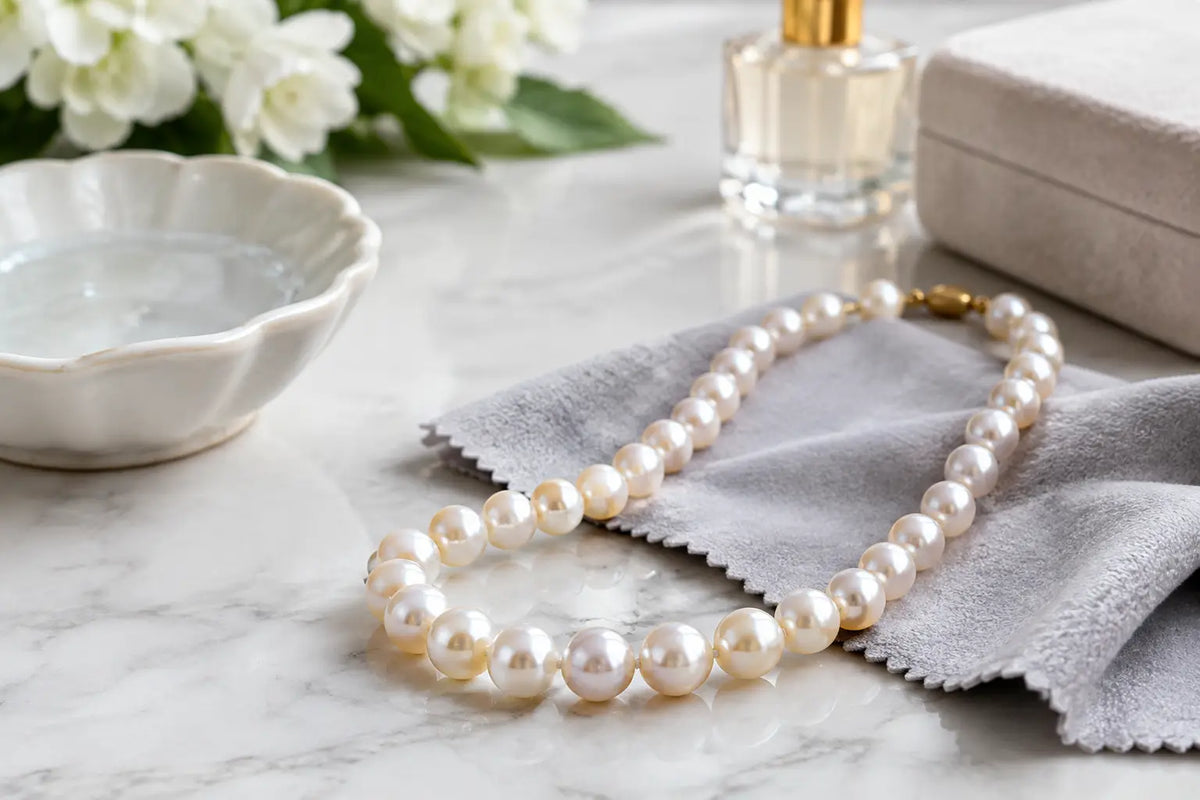
The easiest habit is also the most effective: after wearing pearl jewellery, give it a gentle wipe with a soft, clean cloth. This removes oils, sweat and traces of cosmetics before they have time to sit on the surface. Use a dry cloth for a quick refresh, or one that is very slightly damp with plain water if there is visible residue. Always dry the piece straight away.
Avoid jewellery dips, ultrasonic cleaners, abrasive polishing cloths and strong soap. These can be too aggressive for pearls, even if they are marketed for jewellery in general. A pearl should never need scrubbing to look good. If it does, gentler care has been missed somewhere along the way.
For storage, place pearl pieces separately in a soft pouch or lined jewellery box compartment. This prevents harder jewellery, especially stones and metal edges, from scratching the surface. Do not toss pearl earrings into a mixed tray with rings, chains and bracelets after a night out. A few extra seconds of care protects the finish you chose them for.
If you own a traditional strand of genuine pearls, have the stringing checked periodically, especially if you wear it often. The thread can absorb moisture and skincare residue over time. For pearl earrings, rings or pendants, inspect the setting occasionally to make sure every detail remains secure.
Real pearls, faux pearls and pearl details
Not every pearl-look piece needs the same level of caution. Genuine pearls and cultured pearls deserve the gentlest treatment because nacre is naturally delicate. They are ideal for occasions when you want that unmistakably organic glow, but they are not the most carefree choice for the gym, beach or shower.
Faux pearls offer a polished alternative for everyday styling. Their care still matters, as coatings can wear, but they are often a practical way to bring a soft pearl finish into layered necklaces, huggie earrings and statement details without reserving the look for special plans.
It is also helpful to consider the metal alongside the pearl. A pearl pendant on a low-quality plated chain may look tired because the metal has tarnished, even if the pearl itself is in good condition. Choosing tarnish-resistant, hypoallergenic materials such as 316L stainless steel for the metal components helps keep the overall piece looking bright with less maintenance.
At Moonix, pearl details are designed to bring a refined finish to daily styling while durable stainless steel settings support the easy-wear appeal. It is still wise to remove any pearl-accented style before swimming or showering, but the metal itself is made for far more dependable, everyday shine.
Can you restore dull pearls?
Sometimes. If the issue is simply makeup, skin oils or a light film of product, a careful wipe with a soft damp cloth can bring back some of the glow. Follow with a dry, lint-free cloth and let the piece air dry fully before storing it away.
If a real pearl has lost lustre because its nacre has been worn down, home cleaning cannot rebuild those natural layers. Likewise, if a faux pearl coating has peeled, cracked or become deeply scratched, polishing it may make the damage more obvious. In these cases, replacement is often the better choice for fashion jewellery, while a valuable genuine pearl piece may be worth taking to a specialist jeweller for advice.
Be wary of online cleaning shortcuts involving vinegar, bicarbonate of soda, toothpaste or washing-up liquid. These methods may be useful for other materials, but pearls are not the place to experiment. Their beauty comes from a fine, smooth surface, not something that benefits from abrasion or acidic cleaning.
A simple pearl-wearing routine
Think of pearls as the final touch to your look. Get ready first, then add your earrings, necklace or bracelet once skincare, makeup and fragrance are finished. Take them off before exercise, a shower, a swim or cleaning the house, then wipe them before putting them away.
That is all most pearl jewellery needs. With a soft cloth, separate storage and a little distance from beauty products and water, the glow remains part of your everyday styling rather than something you only save for special occasions. Wear your pearl pieces often, just give their luminous finish the gentle treatment it deserves.

