Does Stainless Steel Jewellery Tarnish Over Time?
A necklace that leaves a green mark, a ring that turns coppery after a few wears, earrings that make sensitive skin itch - those are familiar frustrations with lower-quality fashion jewellery. So, does stainless steel jewellery tarnish? High-quality stainless steel is highly tarnish-resistant, especially 316L stainless steel, but no piece of jewellery is completely immune to build-up, scratches or the effects of harsh chemicals.
That distinction matters. Tarnish-resistant jewellery is designed to keep its polished finish through the routines real life brings: hand washing, showers, busy workdays, evenings out and holidays. It is the reason stainless steel has become a favourite for everyday pieces that look considered without asking for delicate treatment.
Why stainless steel stays bright
Tarnish is a surface reaction. With metals such as sterling silver, copper and brass, oxygen, moisture and sulphur compounds in the air can react with the metal and create a darker, duller layer. Plated costume jewellery has a different problem: its thin outer coating can wear away, revealing the base metal underneath.
Stainless steel behaves differently. It contains chromium, which forms a fine, protective oxide layer on the surface. This layer helps the metal resist rust, discolouration and everyday corrosion. If it is lightly disturbed, it can reform when exposed to oxygen - one of the clever reasons stainless steel works so well beyond the jewellery box.
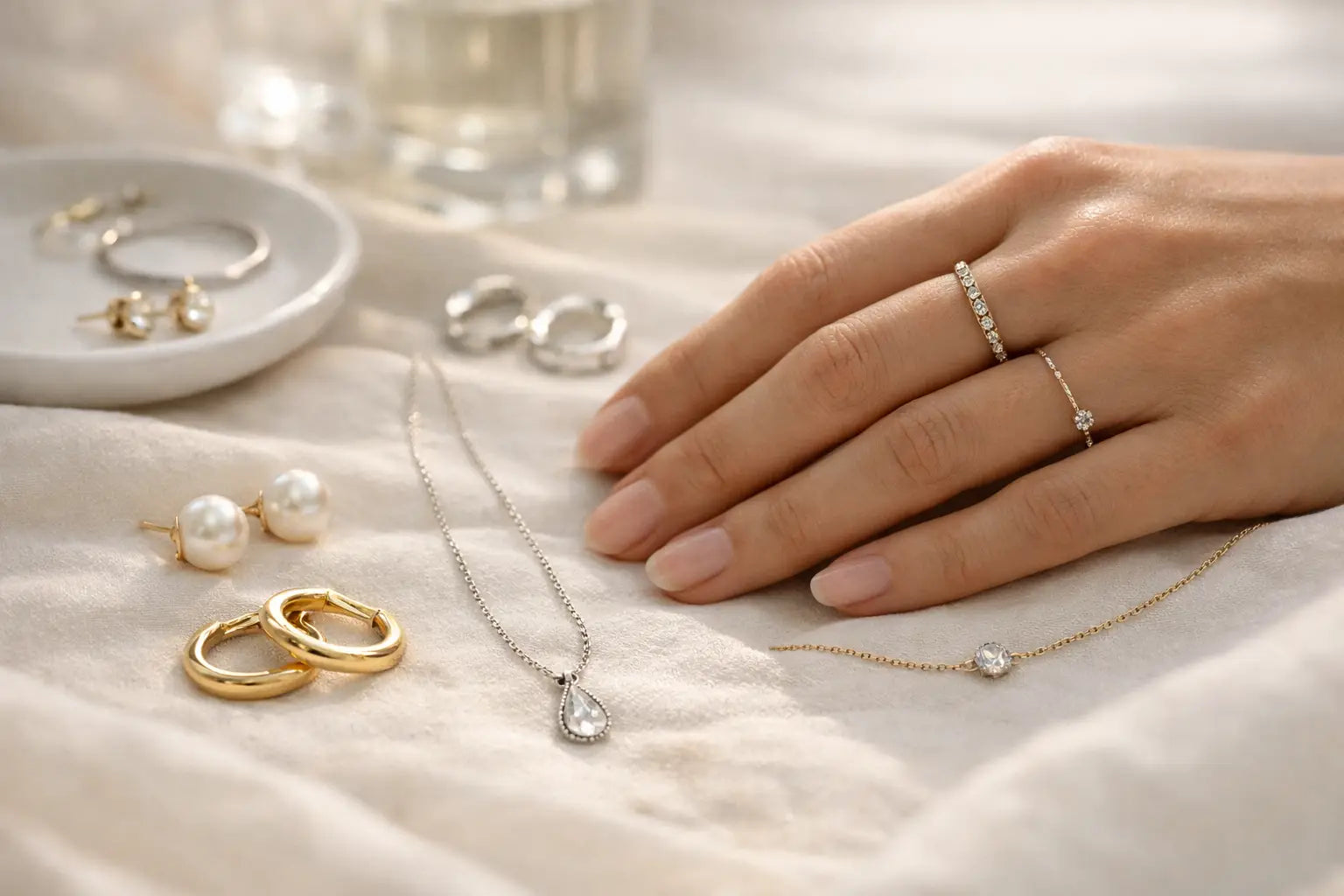
Moonix uses 316L stainless steel, often called surgical-grade steel. Alongside chromium, it contains molybdenum, which adds further resistance to corrosion. For jewellery, that means a dependable, bright base for gold-tone finishes, sleek silver-colour pieces and the small details you wear repeatedly: huggies, adjustable rings, tennis bracelets and layered chains.
Does stainless steel jewellery tarnish in water?
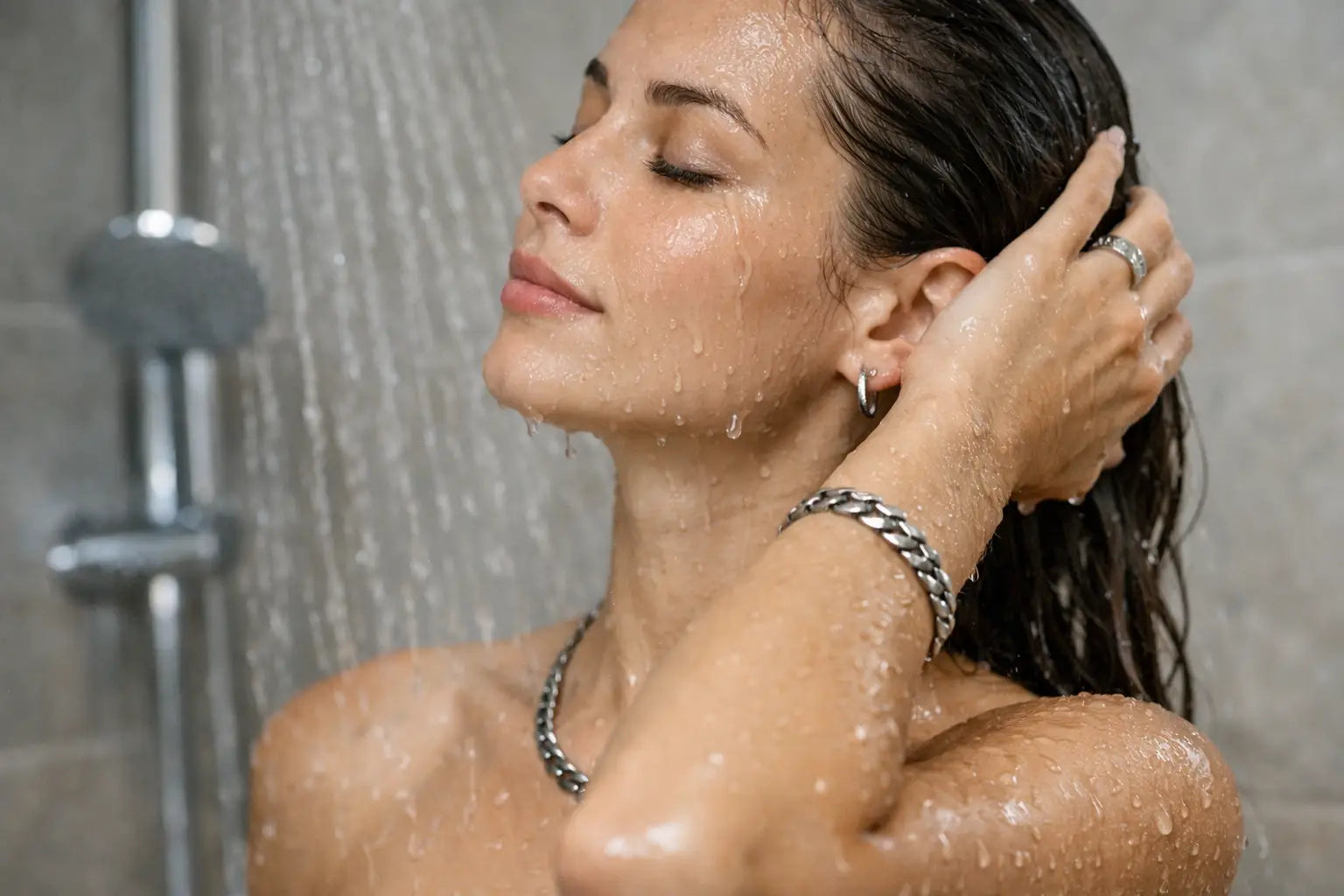
For well-made 316L stainless steel jewellery, ordinary water is not usually the concern people imagine it to be. Washing your hands, getting caught in the rain or wearing a favourite necklace in the shower should not make the steel itself suddenly tarnish. This is why waterproof stainless steel jewellery feels so refreshingly practical compared with pieces that need removing at every sink.
However, waterproof does not mean careless-proof. Pools and hot tubs contain chlorine, while sea water leaves salt residue. Both can leave a film on the surface if jewellery is not rinsed afterwards. The same applies to soap, shampoo, body lotion and sunscreen. These products do not necessarily damage the steel, but residue can make a polished piece look less luminous than it did on day one.
Gold-tone stainless steel deserves a little extra consideration. The underlying 316L steel remains durable, but the appearance of any coloured finish depends on its quality, thickness and how it is worn. Constant friction against hard surfaces, repeated contact with strong chemicals, or storing pieces tangled together can gradually affect the outer finish. A little mindful care keeps the glow looking fresh for longer.
Tarnish, dullness and scratches are not the same thing
When jewellery loses its shine, it is easy to call it tarnish. Often, it is something else.
A cloudy look is commonly caused by product residue, fingerprints or minerals left behind by water. This is usually removable with a gentle clean. Fine hairline marks are often normal wear from rings touching keys, desks, bags or gym equipment. They do not mean the jewellery has corroded - they simply soften a mirror-polished surface over time.
True corrosion is more serious and far less common with quality stainless steel. It may appear as persistent rough patches, pitting or orange-brown spotting, usually after intense or prolonged exposure to chemicals. If a piece is plated, visible wear may also show as a change in colour at high-contact points, such as the underside of a ring or the clasp of a necklace.
Your own skin chemistry can play a part, too. Sweat is naturally salty and its acidity varies from person to person. Perfume, moisturiser, medication and even the climate can influence how often jewellery needs wiping down. This is not a sign that you are wearing it incorrectly. It simply means your everyday staples benefit from an occasional reset.
How to keep stainless steel jewellery looking polished
The good news is that stainless steel does not need a complicated maintenance ritual. A simple habit after wear is enough for most pieces. Wipe jewellery with a soft, dry microfibre cloth before putting it away, particularly after a warm day, a workout or a beach trip.
When a deeper clean is needed, use lukewarm water, a small amount of mild soap and a soft cloth. Gently clean around clasps, stone settings and textured details, then rinse thoroughly and pat dry. Avoid abrasive cloths, toothpaste, bleach and strong household cleaners. They can scratch polished surfaces or affect gold-tone finishes, even when the steel beneath is durable.
Keep your pieces separately in a soft pouch or lined jewellery box where possible. This prevents chains from knotting and helps minimise scratches from metal-on-metal contact. Put jewellery on after perfume, hairspray and body products have settled, then take it off before applying heavy creams. These tiny choices make a noticeable difference to bright, reflective designs.
For zircon-set pieces, a soft brush can help lift residue from around the setting, but use a light touch. The goal is to restore sparkle, not scrub the jewellery. If you are unsure about a particular finish or stone detail, gentle wiping is always the safest starting point.
Why 316L stainless steel is a better everyday choice
Affordable jewellery should not have to feel temporary. Stainless steel offers a considered middle ground between delicate plated fashion jewellery and the investment of solid precious metals. It is strong, low-maintenance and well suited to the kind of styling that is actually lived in: a stack of rings at the office, small hoops for weekend plans, or a tennis necklace paired with a plain knit.
It is also a particularly appealing option for sensitive ears and skin. 316L stainless steel is commonly chosen for its skin-friendly qualities and is nickel-free in Moonix jewellery. While every individual can have different sensitivities, many people find stainless steel more comfortable than jewellery made with unknown base metals or high-nickel alloys.
There are trade-offs, of course. Stainless steel cannot be resized as easily as gold, and deeper scratches are more difficult to polish out at home. Its durability also does not remove the need for common sense around chlorine, harsh cleaners and physical impact. Still, for jewellery intended to be worn over and over, its resistance to tarnish is a genuine advantage rather than a marketing flourish.
A quick answer to common concerns
Can stainless steel jewellery turn green?
Quality stainless steel itself is very unlikely to turn skin green. Green marks are more often associated with copper or brass reacting with moisture and skin oils. If you notice residue, clean the piece and make sure no product has collected beneath a ring or bracelet.
Can I sleep in stainless steel jewellery?
You can, but removing fine chains, hoops and stone-set pieces before bed can prevent tangling, pressure and unnecessary rubbing. A simple smooth ring is different from a delicate necklace, so let the design guide you.
How often should I clean it?
A quick wipe after wear is ideal, with a gentle soap-and-water clean whenever the piece looks dull or feels coated. Jewellery worn daily may need this every few weeks; occasional pieces need far less.
The best everyday jewellery earns its place by making getting dressed feel easy. Choose pieces you love, wear them without overthinking every splash of water, and give them the small amount of care that lets their shine keep up with your life.