Are Huggies Comfortable for Everyday Wear?
A pair of earrings can look perfectly petite and still become the first thing you want to take off by lunchtime. The question, “are huggies comfortable”, comes down to more than their small, close-fitting shape. The hinge, hoop diameter, weight, post placement and metal all decide whether they feel like an easy daily staple or a style best saved for a few hours.
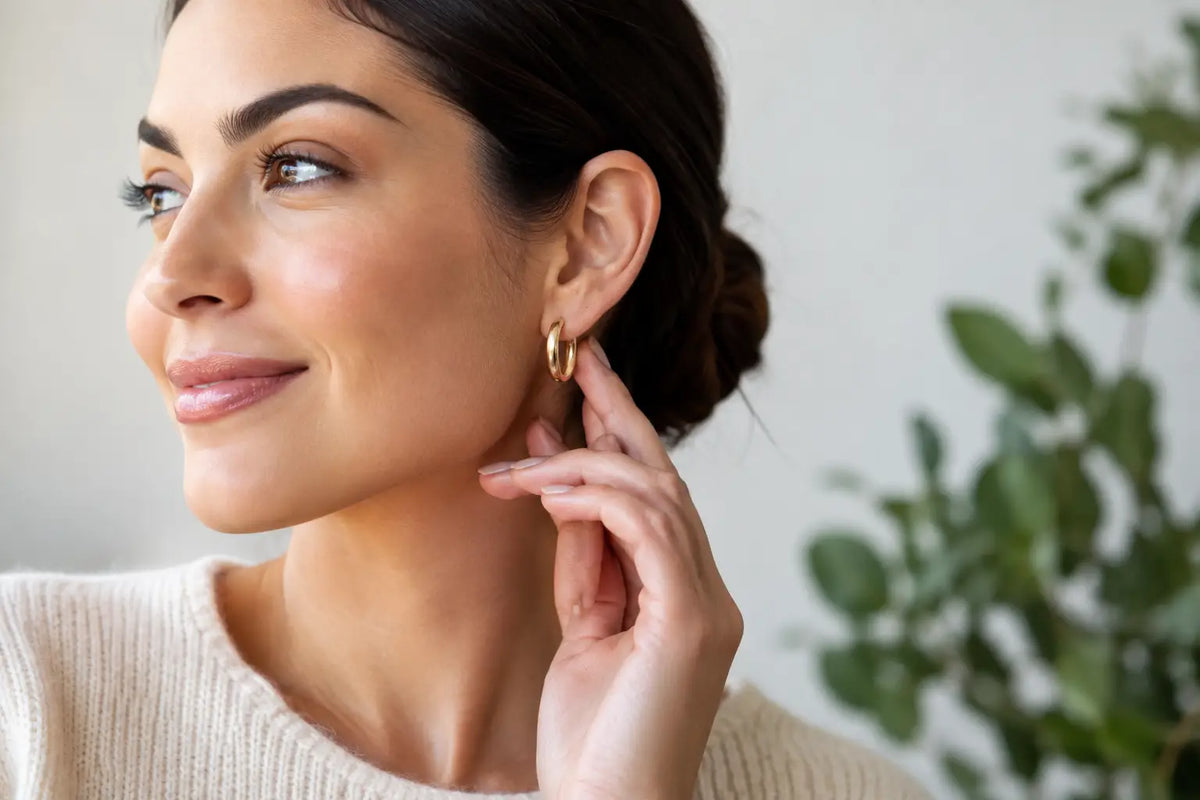
For many people, well-made huggie earrings are among the most comfortable styles to wear. They sit neatly around the lobe, do not swing into your neck or catch in your hair as readily as longer earrings, and bring a polished finish to everything from a crisp shirt to an evening look. But comfort is personal, particularly if you have sensitive ears, thicker lobes or piercings placed higher on the ear.
Are Huggies Comfortable? Usually, With the Right Fit
Huggies are small hoop earrings designed to sit close to the earlobe - hence the name. Most use a hinged closure: a slim post goes through the piercing and clicks into the back of the hoop. This creates a clean circular silhouette without the butterfly back found on studs.
Their close fit is exactly why huggies can feel so effortless. There is less movement than with a drop earring, less chance of snagging on a jumper or scarf, and no separate backing pressing into the skin behind your ear. A lightweight pair can be easy to forget you are wearing, while still giving your jewellery stack a considered, luminous detail.
The trade-off is clearance. A huggie that is too small for your lobe, or for the position of your piercing, may pinch or place pressure on the piercing channel. The best pair should close securely with a gentle click, not require force to fasten and not leave your lobe feeling compressed.
The diameter matters more than you might think
Small huggies often range from a very snug 8 mm inner diameter to roomier options around 10-12 mm or more. The outer measurement can be misleading because the thickness of the hoop reduces the space inside. When assessing fit, the inner diameter is the number that matters.
If your piercing sits centrally in a slim lobe, a close little huggie may sit beautifully. If your lobes are fuller, your piercing is high, or you simply prefer a little breathing room, choose a slightly larger diameter. It will still give you that refined, close-to-the-ear look without feeling restrictive.
What Makes Huggie Earrings Feel Good All Day?
Comfort is often the result of several small design decisions working together. The four details below are worth considering before you choose your next pair.
- Weight: Slim, hollow or finely shaped huggies tend to feel lighter than chunky, heavily embellished hoops. Sparkle does not have to mean heaviness - a neat row of 5A zircon can add light-catching detail without overwhelming the lobe.
- Closure: A smooth hinged post should align easily and click shut securely. If the post feels rough, bent or difficult to locate in the clasp, it can irritate the piercing and make daily wear less pleasant.
- Shape: Rounded edges are kinder against the ear than sharp, angular profiles. This is especially relevant for sculptural styles, baguette details and textured finishes.
- Material: Your skin is in contact with the metal for hours, so the base material matters as much as the design. Nickel-free, hypoallergenic options can make a meaningful difference for ears that react to inexpensive fashion jewellery.
Huggies for Sensitive Ears: What to Look For
If your ears have ever felt hot, itchy or sore after wearing earrings, it is understandable to be cautious. Reactions can come from nickel, lower-quality plating, trapped product around the piercing, or simply wearing a fit that is too tight for too long.
Start with clean, fully healed piercings and choose earrings made from materials known for skin friendliness. Avoid treating “hypoallergenic” as a universal guarantee: sensitivities vary, and even a trusted material may not suit every individual. If you know you react to a particular metal, follow the advice that has worked for you and consider speaking with a professional piercer or healthcare professional for persistent irritation.
A comfortable pair should not sting as you insert it or make the piercing feel tender once closed. Take them out if you notice redness, swelling or soreness. That is not a sign that you need to “get used to” the earrings - it is a cue to reassess the metal, closure or size.
Keeping your huggies and piercings clean also helps. Remove any build-up from skincare, hair products and everyday wear with a soft cloth, and dry jewellery carefully after washing. Waterproof stainless steel is designed to handle daily life with far less fuss than delicate plated pieces, but a little care keeps the surface bright and the closure working smoothly.
Choosing the Most Comfortable Huggie Style
The most wearable huggie is not always the smallest one. Think about how you want it to sit, what you usually wear alongside it, and whether you like a quiet everyday gleam or a more dressed-up finish.
For a first pair, a simple polished huggie with a little room around the lobe is an easy choice. It works alone for a clean, minimal look, or as the foundation of an ear stack with a tiny stud or a second hoop. If you want more sparkle, choose a slim zircon-set design rather than a wide, weighty hoop. The result still catches the light but remains easy to wear from morning coffee to late plans.
Pearl details, floral forms and clover-inspired accents bring a softer, more feminine mood, though they may sit differently from a classic round hoop. Look closely at where the decorative element rests. A design that faces forward and stays balanced is often more comfortable than one that pulls the hoop outward.
It is also worth considering your sleep and exercise habits. Many people find lightweight huggies comfortable enough for long days, but wearing any earrings in bed can create pressure, particularly if you sleep on your side. For the sake of your ears and your jewellery, taking them out before sleeping is usually the more comfortable option. Remove them for activities where they could be knocked, tugged or exposed to harsh chemicals, too.
How to Tell if Your Huggies Are Too Tight
A close fit should look intentional, never strained. If there is no visible room between the inside of the hoop and your lobe, that does not automatically mean there is a problem, but pay attention to how it feels after an hour or two.
Signs a huggie may be too tight include a persistent pinching sensation, difficulty closing the clasp, a deep indentation in the skin, or tenderness when you remove it. In that case, moving up by just a couple of millimetres can change everything. A slightly roomier huggie still looks sleek, especially when paired with a delicate necklace, stacked rings or a fine tennis bracelet.
Conversely, a hoop that is far larger than you expected is not necessarily uncomfortable, but it loses the snug huggie effect and may move around more. This is why measurements and product photos both matter: they help you choose a scale that feels like you.
Huggies are at their best when they become the pair you reach for without thinking - bright enough to lift your daily styling, gentle enough to wear on repeat, and fitted to your ear rather than just the trend.