Nickel Free Earrings for Sensitive Ears That Last
A pair of earrings can look perfect in the mirror and still feel like a mistake by lunchtime. If your lobes become itchy, hot, red or sore after wearing jewellery, nickel free earrings for sensitive ears can make the difference between pieces you save for an hour and favourites you wear on repeat.
Sensitive skin should not mean limiting your style to one plain pair of studs. The right material, finish and fastening can give you the polished huggies, pearl drops and light-catching hoops you actually want to reach for, without the familiar irritation afterwards.
Why earrings can irritate sensitive ears
Nickel is one of the most common triggers for jewellery sensitivity. It is often used in metal alloys and can also sit beneath a surface coating on inexpensive plated earrings. As that coating fades through friction, water, perfume and everyday wear, the metal underneath may come into contact with your skin.
The reaction is not always immediate. You might wear a pair comfortably once, then notice tenderness after a full day, or wake up with dry, flaky skin around the piercing. That delay can make it difficult to identify the cause, especially when you rotate between several pairs.
Nickel is not the only possible culprit. An old or unhealed piercing, a tightly fitted backing, trapped product build-up or sensitivity to another metal can all create discomfort. Still, choosing jewellery specifically designed without nickel is a smart first step if earrings regularly leave your ears feeling less than lovely.
Nickel free earrings for sensitive ears: what to look for
A nickel-free label is helpful, but the material and construction still matter. Look for brands that clearly state what their earrings are made from rather than relying on vague descriptions such as “metal alloy” or “fashion metal”. You want confidence in what sits against your skin, especially on posts, hooks and earring backs.
Choose considered materials over quick plating
316L stainless steel is a strong choice for everyday earrings when it is finished for hypoallergenic, nickel-free wear. It has a smooth, polished appearance, resists tarnishing and stands up well to the realities of daily life, from a rainy commute to a last-minute dinner reservation. It also offers a more accessible alternative to precious metals when you want several styles rather than one occasional pair.
Titanium is another well-regarded option for highly reactive skin, particularly for newly healed piercings. Solid gold can suit some wearers too, although purity matters: lower-carat gold is blended with other metals, so it is worth checking the full composition. Gold vermeil and gold-plated earrings can look beautiful, but their suitability depends on the base metal and the quality of the finish.
The most practical choice depends on your sensitivity, budget and how you plan to wear your jewellery. If you want carefree, waterproof shine for nearly every day, durable stainless steel styles are often easier to live with than delicate plating that needs more careful handling.
Pay attention to the parts you do not see
The front of an earring may be made from one material while the post, butterfly back or hook is made from another. For sensitive ears, these are the details that count most. Check that the entire piece, including the components that touch your piercing, is suitable for skin-friendly wear.
A smooth post with a secure, comfortable back is usually kinder to ears than a rough finish or an overly tight fastening. Avoid forcing a post through a piercing. If it catches, clean the earring and try again gently rather than applying pressure to already-sensitive skin.
Find a shape you will genuinely wear
Comfort should support your style, not flatten it. Smaller earrings are often the easiest place to begin if you are testing a new material, but there is no need to stop at basic studs.
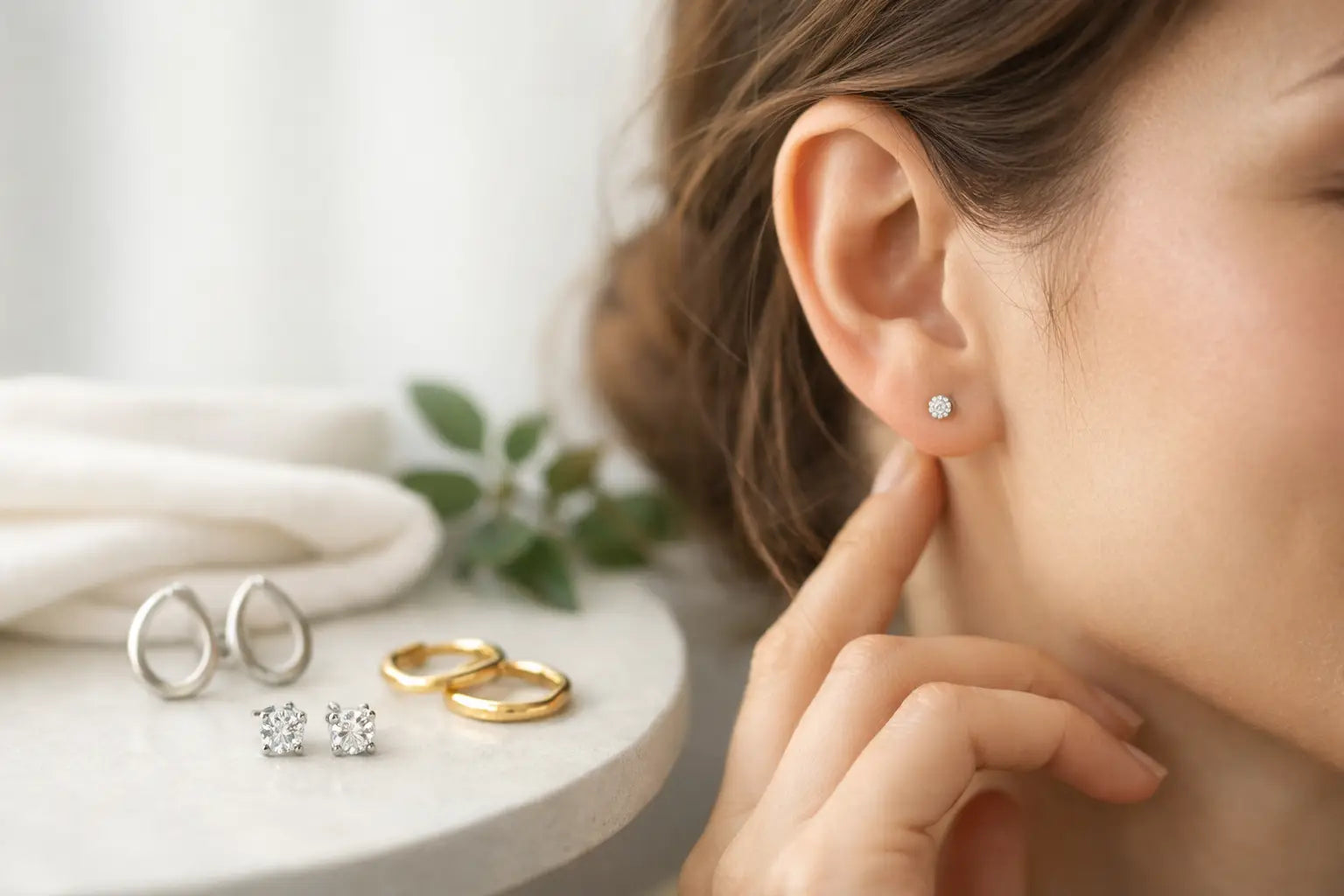
Huggie earrings sit close to the lobe and bring a refined finish to everyday outfits. They are easy to pair with a crisp shirt, knitwear or an evening look, and their compact shape makes them ideal for stacking with a second piercing. Choose a lightweight pair with a smooth closure so they do not pull or press into the lobe.
Slim hoops offer a little more movement while remaining versatile enough for work and weekends. For a softer detail, pearl-accented earrings add light and femininity without feeling overly formal. Clover motifs and petite floral designs create an effortless focal point when your outfit is simple, while baguette-cut zircon styles give you that clean, dressed-up glimmer for evenings out.
Weight is as relevant as material. Even the most skin-friendly earrings can become uncomfortable if they tug at your piercings for hours. If your lobes stretch or ache with larger designs, reserve statement drops for shorter occasions and make lightweight huggies, studs and small hoops your daily foundation.
Build a sensitive-ear earring wardrobe
A small, well-chosen rotation gives you more freedom than a drawer full of unpredictable pieces. Start with a polished pair of everyday huggies, then add minimal studs for quieter days and a brighter hoop or zircon detail for plans that call for a little more shine.
Coordinating finishes make styling feel easy. A warm gold-tone huggie can sit beside a delicate pearl stud, while silver-tone hoops bring a cooler, cleaner edge to tailored looks. If you have multiple piercings, leave a little space between styles so each piece can be seen and your ears do not feel crowded.
Moonix designs its everyday earrings in 316L stainless steel with nickel-free, hypoallergenic wear in mind, so you can mix polished staples with feminine details rather than treating comfort as a compromise. Choosing a few pieces you can wear repeatedly is also more useful than buying a trend-led pair that loses its finish after a handful of outings.
Keep comfortable earrings feeling fresh
Waterproof jewellery is made to keep up with daily wear, but a little care is still worthwhile, particularly when your skin is sensitive. Clean your earrings regularly with a soft, dry cloth to remove skincare, hair product and natural oils. If you have been swimming or sweating heavily, rinse and dry them according to the care guidance provided by the brand.
Make earrings the final part of getting ready. Apply moisturiser, SPF, perfume and hairspray first, then put your jewellery on once those products have settled. This limits residue around the piercing and helps preserve a bright, clean finish.
It also helps to clean your piercing area gently and let it dry fully before inserting earrings. Never share earrings, and do not wear a pair with damaged posts, peeling coating or rough edges. A small flaw can irritate skin that would otherwise be perfectly happy.
When to pause rather than push through
Mild pressure from a new closure can happen, but burning, swelling, weeping skin or persistent pain is a sign to take the earrings out. Give your ears time to settle and avoid reintroducing the same pair immediately. If symptoms are severe, recurrent or do not improve, speak to a pharmacist, GP or qualified dermatologist for individual advice.
Once your skin is calm, reintroduce only one new pair at a time. Wear them for a short period first, then build up gradually. This simple approach helps you work out whether the issue is the material, the weight, the fastening or something else in your routine.
Your jewellery should brighten your daily styling, not leave you counting down until you can remove it. Choose pieces with clear material details, a comfortable fit and a finish you love enough to wear again tomorrow.