Earring Comfort Results You Can Feel All Day
That slight pinch behind the ear, the post that starts to itch by lunchtime, the hoop you cannot wait to remove at the end of dinner - these details shape your earring comfort results far more than most people expect. A beautiful pair should add polish to your outfit, not become the only thing you can think about wearing it.
Comfort is not simply about choosing tiny studs or saving earrings for special occasions. The right materials, proportions and fastening can make a noticeable difference, whether you prefer a subtle huggie, a luminous pearl detail or a more statement-making drop. When those elements work together, earrings become what they should be: easy daily adornments you reach for again and again.
What creates better earring comfort results?
The most comfortable earrings tend to share three qualities: they are kind to the skin, balanced on the lobe and securely fitted without being tight. Each matters, and one cannot always compensate for another. A very lightweight earring may still irritate if its metal does not agree with your skin, while a skin-friendly style can feel awkward if it is overly long or badly balanced.
For regular wear, the metal is often the first place to look. Many fashion earrings are made with base metals or surface finishes that can react with moisture, fragrance, skincare and natural skin oils. This can lead to redness, itching or discolouration around a piercing, particularly if your ears are sensitive.
Stainless steel offers a more dependable option for everyday jewellery. Moonix uses 316L stainless steel in its pieces, alongside 5A zircon details, for a polished look that is waterproof, hypoallergenic, nickel-free and designed to resist tarnishing. It is a practical choice for people who want their jewellery to keep up with busy mornings, office days, weekend plans and the occasional unexpected shower.
Of course, skin sensitivity is personal. Even when a material is widely considered skin-friendly, it is sensible to stop wearing a pair if you notice discomfort, swelling or persistent irritation. Fresh piercings also need their own aftercare routine and should only be fitted with jewellery recommended by a professional piercer.
Weight matters more than size
A large earring is not automatically uncomfortable, and a small earring is not always weightless. What matters is how the piece sits. An earring that pulls forward can stretch the piercing slightly and create a sore, heavy feeling as the day goes on. This is why a compact, well-proportioned design can often feel more luxurious to wear than a larger piece with little balance.
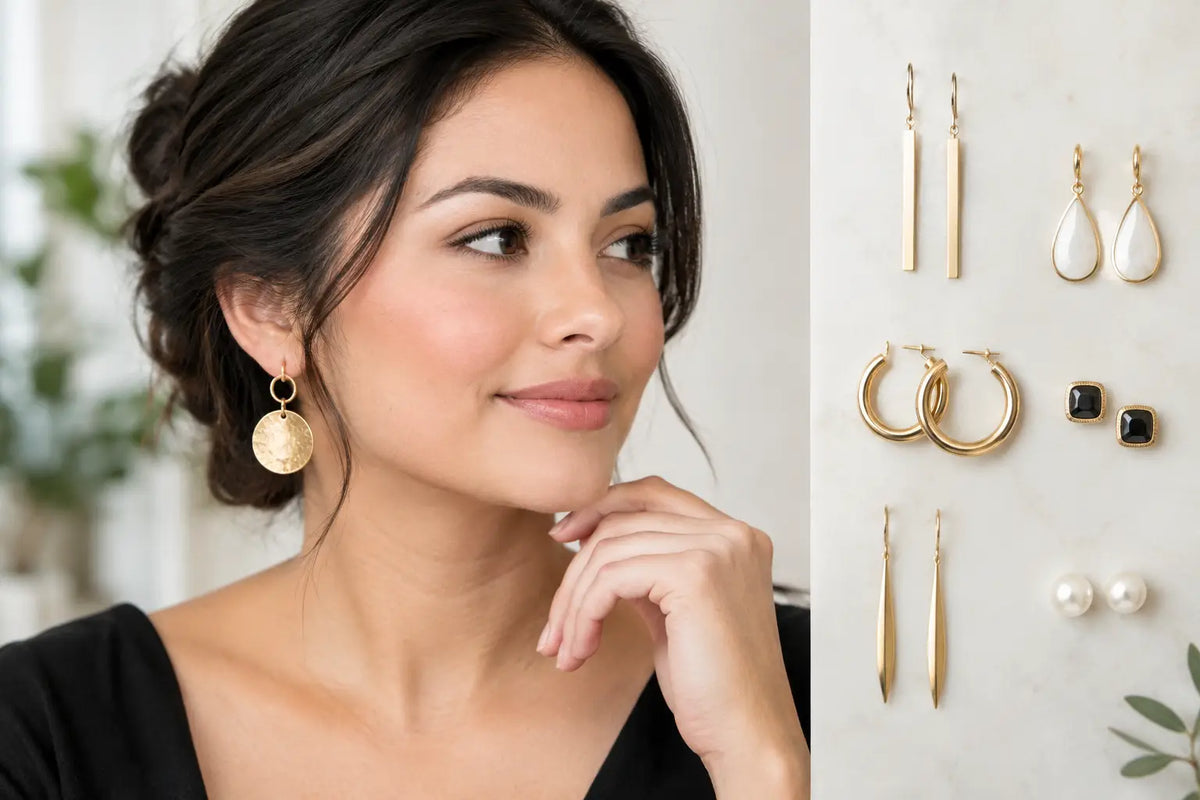
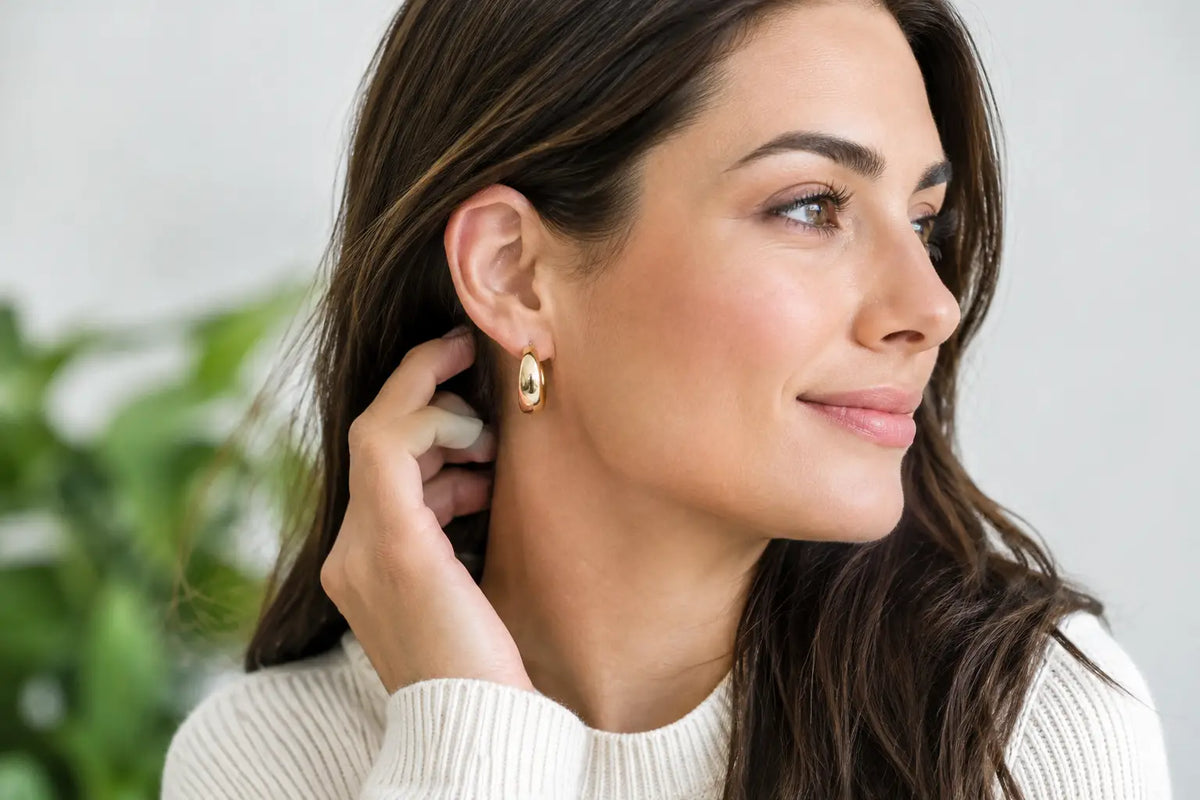
Huggie earrings are especially popular for daily styling because they sit close to the lobe. Their neat shape gives the appearance of a finished look without swinging, catching in hair or competing with a high neckline. A slim huggie with a subtle row of zircon can bring enough light to a simple knit, blazer or white shirt while remaining beautifully low-fuss.
Studs are another reliable choice when comfort is the priority. Floral shapes, clover motifs and pearl-inspired details provide softness and personality without adding unnecessary movement. They are also an easy starting point if you are building an ear stack and want each piece to feel intentional rather than crowded.
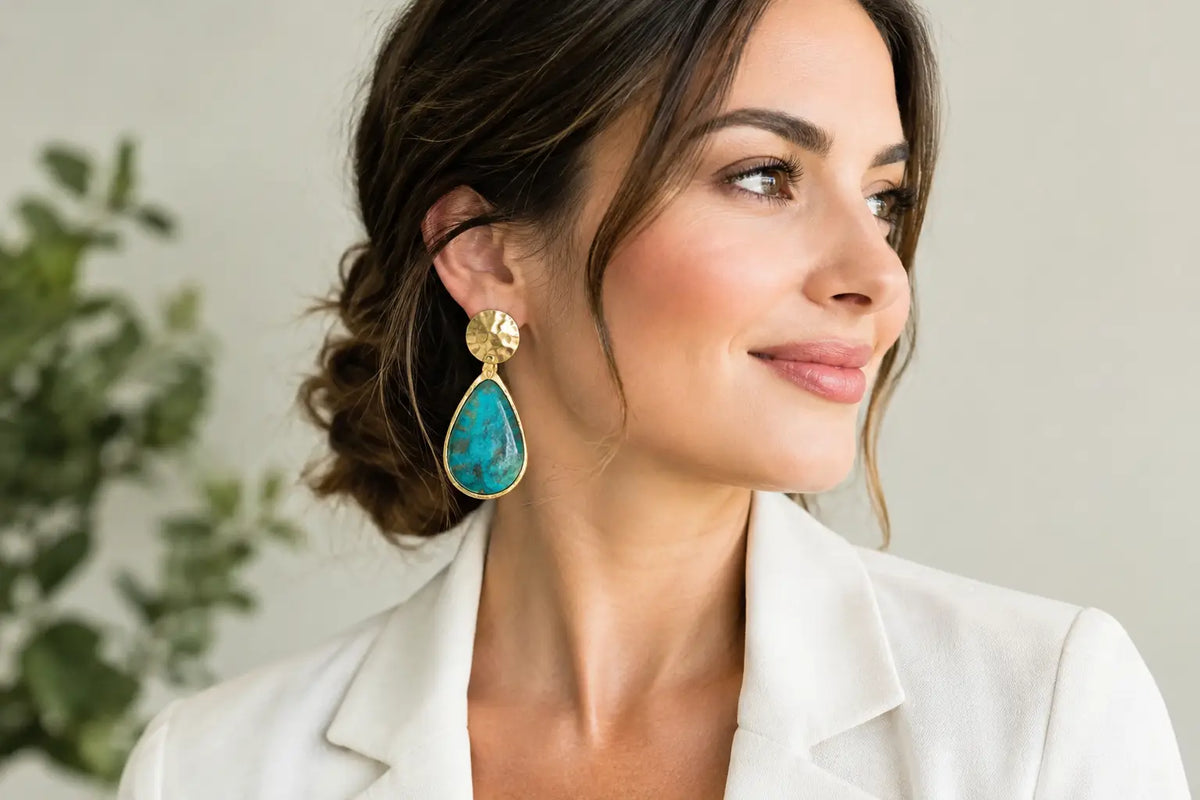
Longer drops and hoops have their place, especially for evenings or occasions when you want a little more presence. The trade-off is movement. If you wear your hair loose, use headphones often or wrap scarves close around your neck, choose a lighter style and give yourself enough room between earrings to avoid tangling.
The fastening should feel secure, not forceful
An earring back that is too loose can make you constantly check whether your jewellery is still there. One that presses too firmly can leave your lobe tender. The ideal fit feels secure when you gently move the earring, but does not compress the skin.
With studs, slide the back on until the earring sits in place, then check that there is a little breathing room. If you can see an obvious gap or the earring tips forward, adjust it. For huggies and click-close hoops, listen and feel for the closure to connect properly before leaving the house. Do not force the clasp if it is misaligned - remove it, line up the pin and try again gently.
It is also worth matching your earrings to your piercing placement. Lobes vary in thickness, and a close-fitting huggie that looks perfect on one person may feel restrictive on another. If you are between sizes or unsure, a slightly roomier hoop usually offers more flexibility for all-day wear.
Small habits that protect comfort and shine
Even durable jewellery benefits from a little thought. Earrings collect traces of skincare, hair products and natural oils, especially around the post and clasp. A quick wipe with a soft, dry cloth after wear helps keep the surfaces fresh and makes insertion more comfortable the next time.
Before putting on earrings, let moisturiser, SPF, perfume and hair spray settle. This is particularly useful for anyone prone to irritation, as it reduces product build-up near the piercing. If you are travelling, store pairs separately in a small pouch or compartment so posts and delicate zircon settings do not rub against other jewellery.
For everyday styles, avoid sleeping in earrings unless the specific design is made and fitted for that purpose. A hoop can catch in bedding, and even a small stud can create pressure when you sleep on your side. Taking them out at night gives both your ears and your jewellery a simple reset.
Build a comfortable earring wardrobe
The easiest way to get more from your jewellery is not to find one pair that works for every plan. It is to create a small edit that suits different moments. Think of it as choosing your go-to silhouettes rather than collecting earrings that only work once.
Start with a polished everyday pair: a clean huggie, miniature hoop or zircon stud that works with everything from a workwear co-ord to denim and a soft jumper. Add a feminine detail such as a pearl, petal or clover shape for days when you want your look to feel a little more considered. Then choose one pair with gentle movement - perhaps a refined drop or a slightly bolder hoop - for dinner, celebrations and gifting moments.
This approach also makes stacking feel easier. A delicate huggie in a second or third lobe piercing can frame a simple stud in the first piercing without adding weight to one area. Keep your most substantial piece closest to the main lobe piercing, where the ear can support it best, and let smaller designs bring the finishing detail.
Colour can influence how often a pair gets worn, too. Gold-tone earrings add warmth to cream, brown, black and richer shades, while silver-tone pieces give crispness to denim, grey and cool neutrals. If you wear mixed metals, choose one visible detail to repeat, such as a slim gold huggie paired with a gold-accented ring, so the look still feels calm and cohesive.
When discomfort is a sign to change your earrings
A little awareness is useful, especially if you have spent years assuming earrings are simply uncomfortable. Persistent itching, heat, redness, swelling, weeping or pain are not details to ignore. Remove the earrings and give the piercing time to settle. If symptoms are severe, spread beyond the piercing or do not improve, seek advice from a pharmacist, GP or qualified piercer.
Sometimes the answer is as straightforward as switching from a heavy drop to a lighter huggie. Other times, it is about replacing an old pair with jewellery made for more reliable daily wear. You do not have to choose between looking put together and feeling at ease.
The best earrings quietly earn their place in your routine: the pair you put on for coffee, keep on through meetings and still love when the evening plans change. Choose materials your skin can trust, shapes that suit your day and a fit that feels effortless. Your jewellery should brighten your styling, not ask you to put up with it.