How to Clean Zircon Jewellery Safely at Home
A tennis necklace catches the light differently when every stone is clear. The same is true of a favourite pair of huggies or a stack of rings: a little daily residue can soften their sparkle long before the jewellery has lost its shine. To clean zircon jewellery safely, all you need is a gentle routine, a soft touch and a few minutes at home.
Moonix pieces are made for brightening your daily styling, not for living in a jewellery box. Their 5A zircon and 316L stainless steel construction is waterproof, tarnish-resistant and designed for repeated wear. Still, skincare, make-up and natural skin oils can settle around a setting, so occasional cleaning keeps each detail looking freshly polished.
What makes zircon jewellery lose its sparkle?
Zircon stones are valued for their crisp, diamond-like brilliance. When they look a little cloudy, the cause is usually surface build-up rather than permanent damage. Hand cream, sunscreen, foundation, soap and hair products can leave a fine film over the stones. Rings tend to need attention first because they meet hand wash, lotion and everyday life more often than necklaces or earrings.
The metal matters too. 316L stainless steel is a practical choice for everyday jewellery because it resists tarnishing and does not demand the careful handling associated with some softer metals. Yet even durable materials look their best when residue is removed from the small spaces around a claw, bezel, chain link or earring fastening.
A waterproof piece can comfortably handle showers, hand washing and the occasional rainy day. That does not mean harsh chemicals are a good cleaning shortcut. Waterproof describes wearability, while thoughtful cleaning protects the polished finish and helps the stones remain brilliantly clear.
How to clean zircon jewellery safely
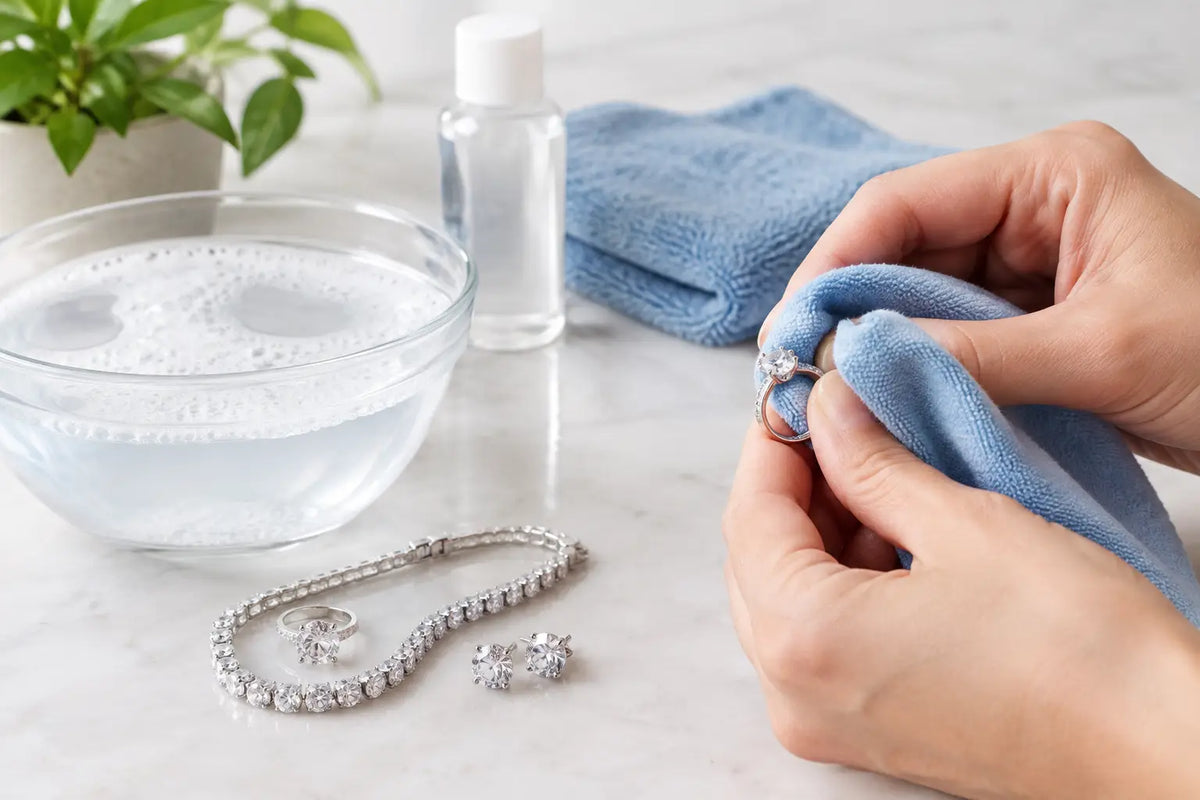
For most pieces, warm water, a mild washing-up liquid and a very soft cloth are enough. Choose a clean bowl rather than cleaning over an open sink, particularly for small studs, open rings or delicate huggies. You want a controlled space where a tiny piece cannot disappear down the plughole.
Fill the bowl with lukewarm water, not hot water, and add just a small drop of mild washing-up liquid. Place your jewellery in the water for a few minutes. This loosens everyday build-up without requiring vigorous rubbing. If your piece has pearl details, avoid soaking it for a prolonged period. Instead, use a damp cloth with a trace of diluted soap, then wipe it clean straight away.
After soaking, use a soft microfibre cloth or an exceptionally soft baby toothbrush to clean around the stone settings. Let the brush barely do the work. Small, light strokes are more effective than pressure, especially around pavé-style tennis jewellery where several stones sit closely together. Do not use a hard household brush, as rough bristles can leave fine marks on polished metal.
Rinse the piece under lukewarm water or wipe it carefully with a separate clean, damp cloth until no soap remains. Then pat it dry with a lint-free cloth. Take a moment to dry around clasps, behind stones and inside adjustable sections, where moisture may linger. Leave the jewellery on a clean towel for a few minutes before putting it away or wearing it again.
The aim is simple: lift away the film, rather than scrub the jewellery as though it needs repairing. For a ring worn every day, this can be a quick weekly ritual. Earrings and necklaces may only need it when they no longer look as bright, or before an evening out, holiday or special occasion.
A quick refresh between proper cleans
Not every shine needs a full wash. If a necklace has picked up a little fragrance or an earring looks dull after a long day, buff it gently with a dry microfibre cloth. This is especially useful for polished stainless steel surfaces and helps prevent product residue from settling over time.
Make this your final step after getting ready. Apply moisturiser, SPF, perfume and hairspray first, give them a minute to settle, then add your jewellery. It is a small habit that keeps a Lumi Clover pendant, a Baguette Gleam ring or your everyday hoops looking cleaner for longer.
What not to use on zircon jewellery
Strong cleaners can create more work than they save. Avoid bleach, chlorine-based products, acetone, abrasive powder cleaners and undiluted alcohol. They are unnecessary for routine care and can affect the surface finish, especially if used repeatedly or allowed to sit in detailed settings.
Toothpaste is another common but unhelpful suggestion. Its fine abrasive particles are designed for teeth, not jewellery, and can dull polished surfaces over time. Baking soda, salt and rough cloths should also stay out of your jewellery-care routine. If a cleaner feels gritty or a brush feels firm against your skin, it is too aggressive for your pieces.
Ultrasonic cleaning machines are not always the easy answer either. Vibration can be unsuitable for jewellery with delicate stone settings, pearl accents or pieces that have had a knock. A soft manual clean is slower by only a few minutes and gives you the chance to look closely at every fastening and stone.
Swimming deserves a little nuance. Moonix jewellery is made to be waterproof, so an accidental dip need not spoil your plans. However, pool water can contain chlorine, and sea water leaves salt behind. Rinse your jewellery in fresh water afterwards and dry it well. For frequent swimming, removing your favourite pieces first is the simplest way to reduce unnecessary build-up.
Caring for different jewellery styles
Rings need the most regular attention. Clean the inside of the band as well as the stone-facing side, since this is where lotion and soap collect. Adjustable rings should be dried carefully at the opening, then stored in their natural shape rather than squeezed repeatedly.
For huggie earrings and hoops, pay attention to the hinge and post. A soft, dry cloth after wear can help keep the mechanism clean. If you clean a necklace or bracelet, run the cloth gently along the chain and check the clasp afterwards. There is no need to tug or twist the chain to make it shine.
Tennis jewellery benefits from patience. The closely set zircon stones create that continuous, light-catching line, but the spaces between them can hold product residue. Soak briefly, use a very soft brush with minimal pressure and dry each section carefully. The same approach suits floral and clover motifs, where small details deserve a little extra care.
Pearl-accented pieces need the gentlest treatment of all. Wipe the pearl with a slightly damp soft cloth, rather than soaking it or using cleaning agents. Keep perfume and hairspray away from pearl details where possible, then store them separately so they do not rub against harder jewellery.
Storage that preserves a polished finish
A clean piece can quickly pick up scratches if it is dropped into a crowded jewellery dish. Store rings, earrings, necklaces and bracelets separately when you can, ideally in a soft pouch or compartmented box. Fasten chains before putting them away to reduce tangling, and keep jewellery dry before storage.
You do not need an elaborate collection of cleaning products to keep your daily lucky adornments looking loved. Gentle washing, careful drying and sensible storage are enough for most moments. When your zircon catches the light again, put it on and let it do what it was chosen for: make an ordinary outfit feel a little more considered.