Stainless Steel Versus Sterling Silver for Daily Wear
Your jewellery should work with your morning coffee, last-minute plans and favourite knitwear, not become another thing to take off before washing your hands. When choosing stainless steel versus sterling silver, the best option comes down to how you want to wear it: every day and everywhere, or with a little more care and a classic precious-metal feel.
Both can look beautifully polished. Both can suit a stack of slim rings, a pair of huggies or a necklace worn close to the skin. Yet they behave very differently over time. Knowing the difference helps you choose pieces that stay instantly beloved, rather than sitting unworn in a jewellery box.
Stainless steel versus sterling silver: the key difference
Sterling silver is a precious metal alloy made from 92.5% pure silver and 7.5% other metals, usually copper. That small addition makes soft pure silver practical enough for jewellery, while preserving its bright, cool-toned glow. Look for a 925 stamp as an indication of sterling silver.
Stainless steel is an alloy engineered for strength and corrosion resistance. In jewellery, 316L stainless steel is especially popular because it is hard-wearing, smooth and well suited to regular contact with water. It has a clean, modern finish that can be polished to a silvery shine or finished in warm gold tones.
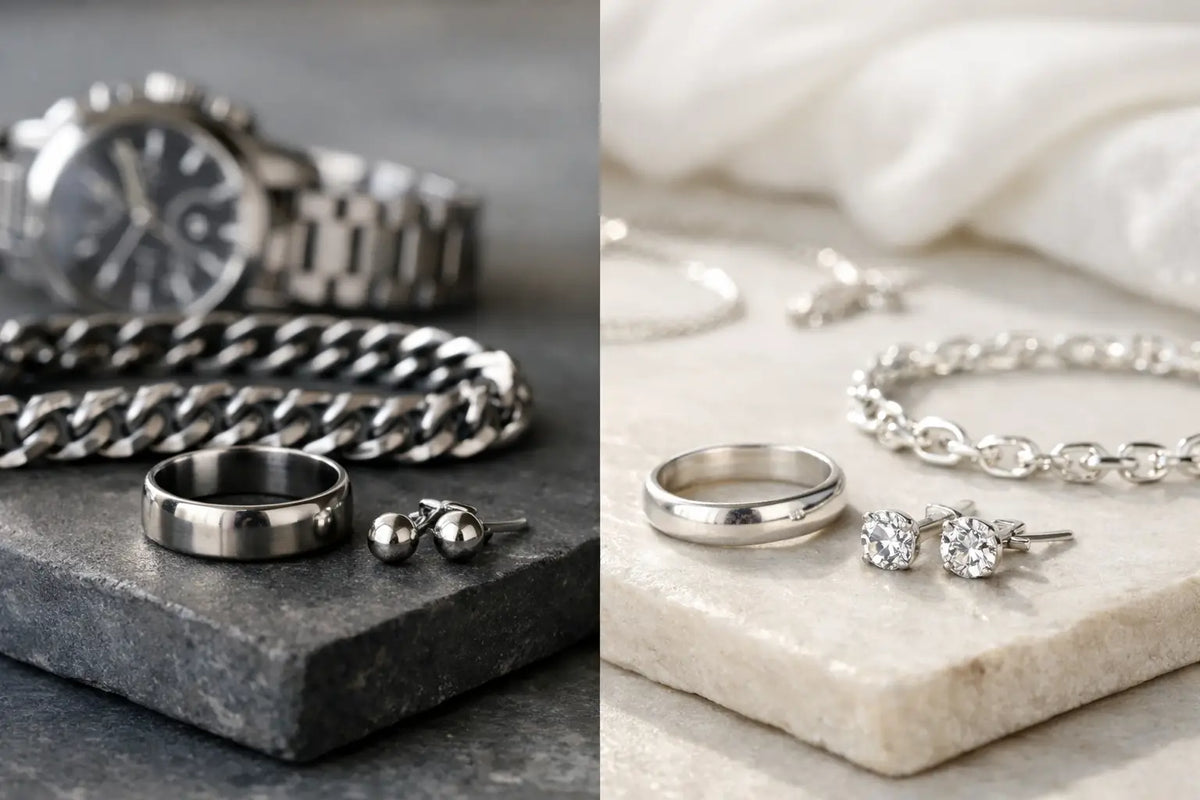
The visual difference can be subtle at first. Sterling silver often has a softer, slightly warmer white lustre, while polished steel looks crisp and mirror-like. The larger difference is maintenance: sterling silver naturally tarnishes, whereas quality stainless steel is far more resistant to dulling from day-to-day moisture and air.
Which material suits everyday jewellery?
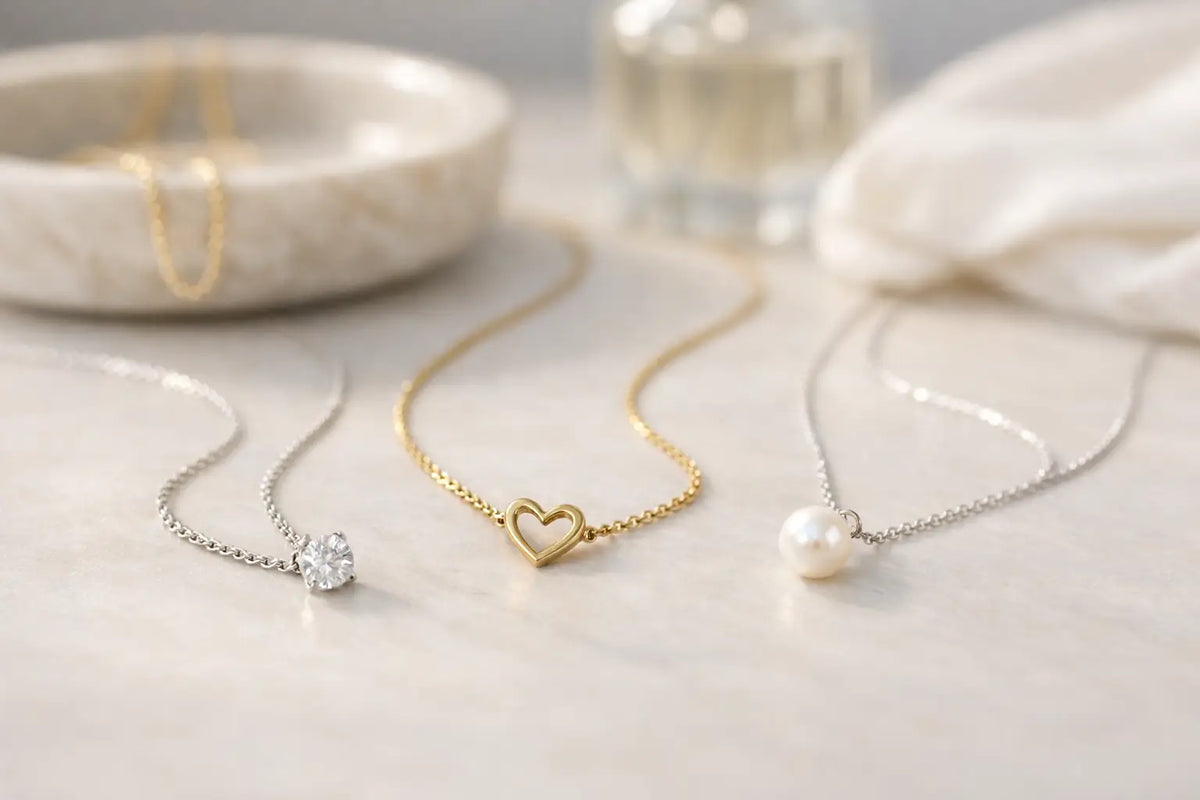
For jewellery you want to keep on through busy weeks, stainless steel is usually the easier choice. A 316L steel ring can cope well with handwashing, rain, gym sessions and the occasional forgotten shower. It is a practical match for the pieces people reach for most: slim stacking rings, hoops, tennis-inspired bracelets and pendant necklaces that brighten daily styling without demanding a care routine.
Sterling silver is also suitable for everyday wear, but it asks for more attention. Moisture, perfume, body oils and sulphur in the air can all cause tarnish, leaving the surface darker or less bright. This is normal rather than a sign that the jewellery is poor quality, and it can often be polished away. Still, if you know you will not routinely clean and store your jewellery carefully, it may feel less effortless.
There is no rule that says precious means better for every purpose. Sterling silver has a meaningful place in a jewellery collection, especially for timeless keepsakes and designs where the romance of a precious metal matters. Stainless steel makes more sense when the priority is dependable, low-maintenance shine at an accessible price.
Strength and scratch resistance
Stainless steel is considerably harder than sterling silver. That means it is less likely to bend out of shape or pick up fine scratches during regular wear. This is particularly useful for open rings, adjustable styles and delicate-looking chains, where you still want the reassurance of a durable base metal.
Sterling silver is softer by nature. A well-made silver piece can last for years, but rings and bracelets may show their life more quickly, especially if worn alongside keys, watches or other metal jewellery. Some people love that gently lived-in character. Others prefer a finish that keeps its high-polish look with very little effort.
Tarnish, water and the reality of ‘waterproof’ jewellery
Tarnish is one of the clearest distinctions in the stainless steel versus sterling silver decision. Sterling silver reacts with compounds in the air and on the skin, creating a darker surface layer. It is not rust, and a polishing cloth or specialist silver cleaner can usually restore its glow. Regular wear can even help reduce tarnish for some people, although this varies with skin chemistry and environment.
Stainless steel is highly tarnish-resistant. This makes it a confident option for daily lucky adornments that are likely to meet hand soap, splashes and British weather. It does not mean every piece should be treated carelessly forever. Chlorine, strong cleaning products, abrasive exfoliants and salty water can affect finishes, stones and clasps over time, particularly on gold-coloured jewellery.
If a steel piece has a gold finish, ask how that colour has been applied. PVD coating is generally more durable than basic flash plating, but even a strong finish benefits from a little kindness. Rinse after swimming, dry it thoroughly and avoid spraying perfume directly onto the jewellery. A few small habits keep the shine looking fresher for longer.
Is stainless steel or sterling silver better for sensitive skin?
Sensitive skin is personal, so no material can promise the same experience for everyone. Sterling silver may contain copper and can also include trace alloy metals depending on the maker. Most people wear quality sterling silver comfortably, but those with known metal allergies should check the full composition rather than relying on a 925 mark alone.
Stainless steel jewellery is often chosen for its skin-friendly reputation, particularly high-grade 316L. However, stainless steel is a family of alloys, not one identical formula, and some varieties contain nickel. If nickel sensitivity is a concern, always look for a clear nickel-free claim from the retailer and choose jewellery designed with hypoallergenic wear in mind.
At Moonix, the focus is on nickel-free, hypoallergenic 316L stainless steel jewellery made for repeat wear. That matters when your earrings, rings and necklace are part of your everyday uniform, rather than accessories reserved for an occasional evening out.
A note on green marks
A green mark on skin is commonly linked to copper reacting with moisture, skincare or natural skin acidity. It is more often associated with copper-containing alloys and low-quality plating than with stainless steel. It is harmless for most people, but understandably frustrating when it appears beneath a favourite ring.
Sterling silver contains copper, so it can occasionally cause this reaction. Stainless steel is less likely to do so. If you are trying to avoid discolouration, choose well-made stainless steel and keep the inside of rings free from lotion and soap residue.
Style, value and how to build a collection
Sterling silver earns its place when you want the status and tradition of a precious metal. It can be resized, repaired and recycled more readily than fashion jewellery, making it a thoughtful choice for a milestone gift or a design you plan to keep for decades. Its price also reflects the material itself, alongside design and craftsmanship.
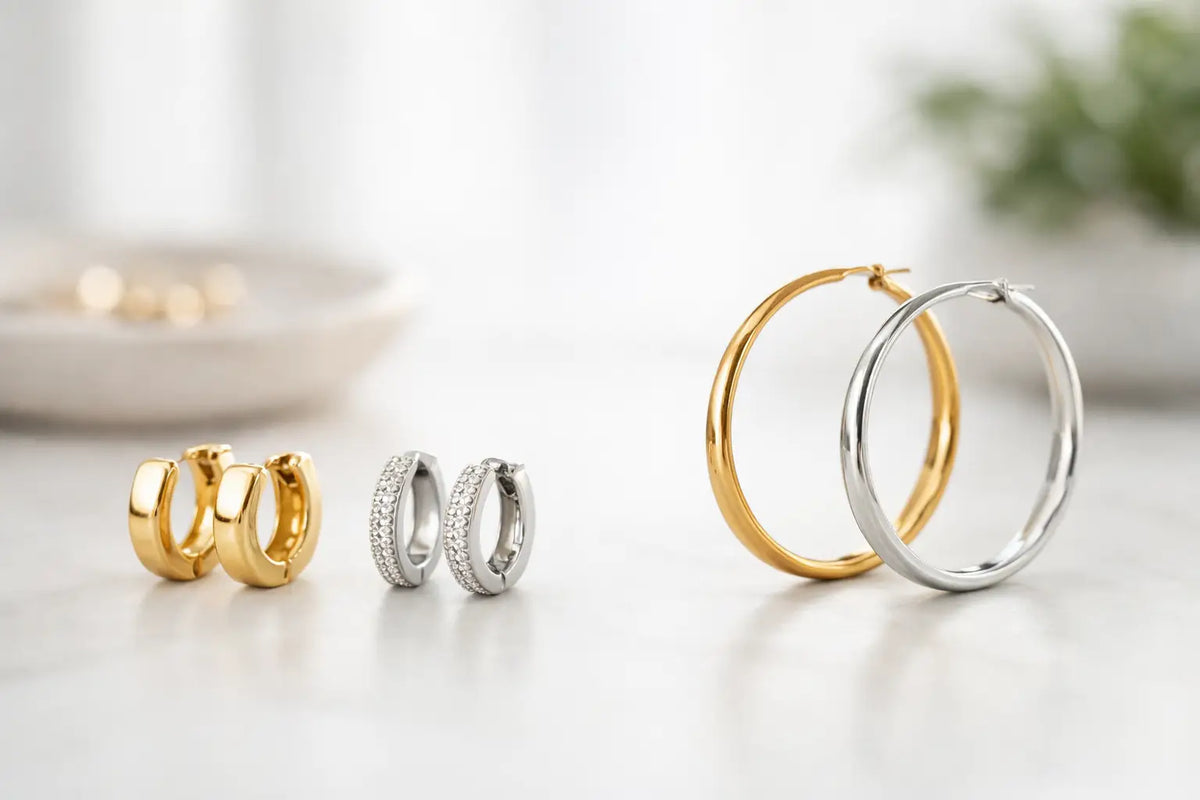
Stainless steel offers a different kind of value: it makes it easier to enjoy variety. Instead of saving for one piece you wear cautiously, you can create a coordinated rotation of polished hoops, a clover pendant, a pearl-detail bracelet and stackable rings. The effect can feel refined and intentional without turning everyday styling into a high-stakes decision.
This is where material and personal style meet. If you prefer a minimal silver-toned wardrobe, both materials blend beautifully. If you enjoy gold tones, stainless steel with a durable gold finish often gives you more freedom to wear the look daily. For layered styling, consistency matters more than following a strict rule. Choose either warm gold or cool silver as your anchor, then add texture through zircon, pearls, floral details or a tennis-inspired line.
How to care for each material
Stainless steel needs only a soft cloth, warm water and mild soap when it loses its freshly polished look. Dry it well afterwards. Avoid harsh chemicals and store pieces separately where possible, especially jewellery with stones or coated colour.
Sterling silver benefits from more regular care. Wipe it after wear, store it in a dry pouch or airtight container, and use a silver polishing cloth at the first sign of tarnish. Avoid wearing it in chlorinated pools or while using household cleaners. If a piece is silver-plated rather than solid sterling silver, be even gentler, as vigorous polishing can wear through the surface layer.
The simplest choice is the one that fits your real routine. Choose sterling silver when you love the story and softness of a precious metal and do not mind occasional polishing. Choose stainless steel when you want jewellery that keeps pace with you - polished, comfortable and ready to be worn over and over. The best pieces are not the ones you save for later; they are the ones that make getting dressed feel a little more like you.