Ring Sizing: Find a Comfortable Everyday Fit
A ring can look perfectly polished in the mirror, then feel distracting by lunchtime if it pinches, spins or catches at the knuckle. Good ring sizing is what makes a favourite everyday piece feel effortless: secure enough to stay put, comfortable enough to forget you are wearing it, and easy to pair with the rest of your jewellery.
Whether you are choosing a slim stacking band, a bright zircon detail or a more sculptural statement ring, a little measuring before you order makes all the difference. Fingers are not a fixed size throughout the day, and different ring shapes can feel noticeably different even when the size is technically the same.
What a well-fitted ring should feel like
The right fit should slide over your knuckle with gentle resistance, sit comfortably at the base of your finger and come off without a struggle. It should not leave a deep mark, make your finger feel warm or restrict movement. At the same time, it should not spin constantly, tilt towards your palm or feel as though it could slip away when your hands are cold.
There is a useful middle ground here. A ring that requires a tiny twist to remove is usually more secure than one that glides straight off, especially for slim bands. But if you need soap, water or a great deal of force to take it off, it is too tight for comfortable daily wear.
Your preferred feel matters too. Some people love the certainty of a close fit, while others prefer a little movement. For a ring you will wear from morning coffee to evening plans, comfort should be the deciding factor.
Ring sizing at home: two reliable methods
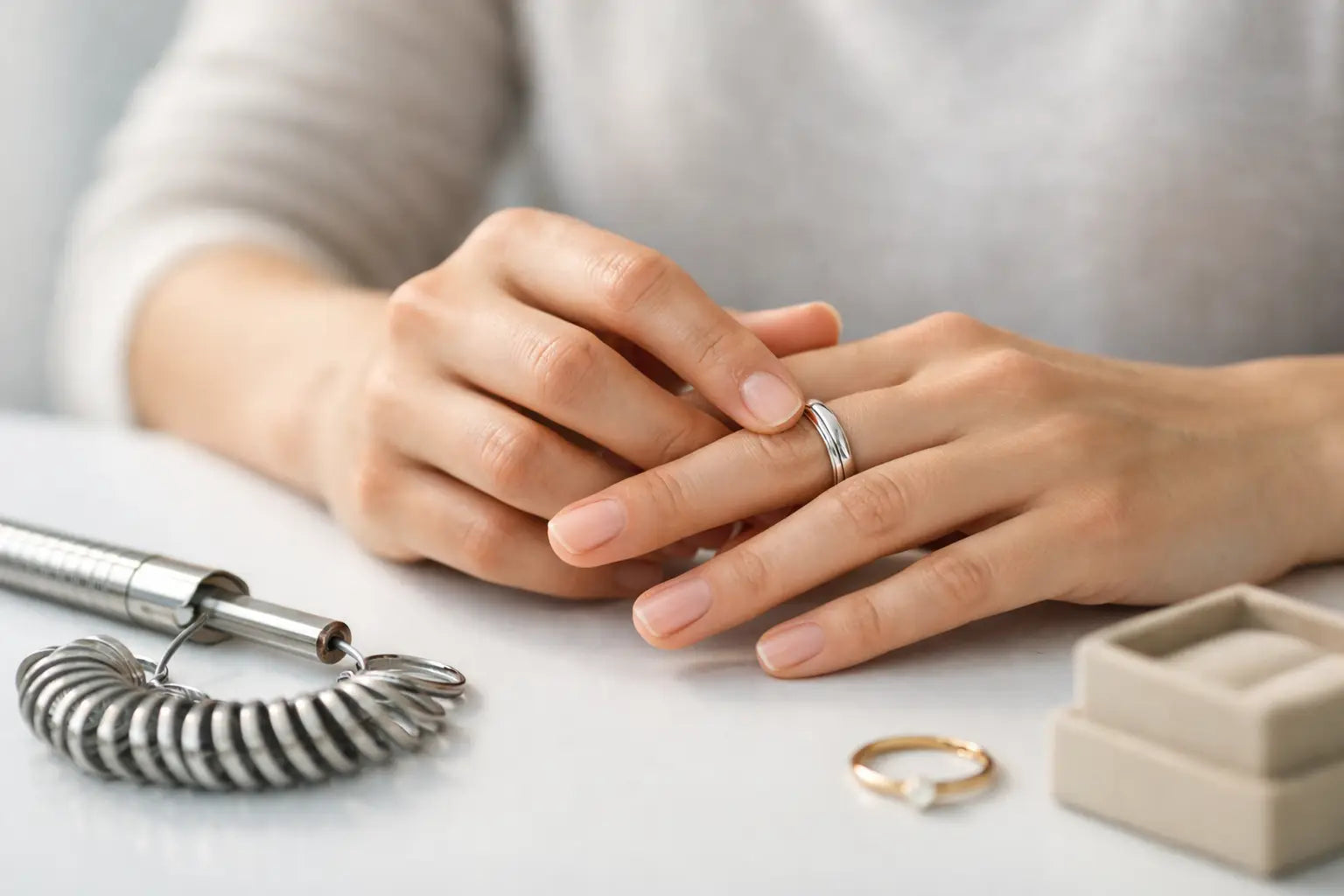
The most accurate home option is to measure a ring you already own and love wearing on the same finger. Place it flat on a ruler and measure the inside diameter from one inner edge to the other. Do not include the metal itself. Match that measurement to the size guide provided for the ring you are considering, as sizing charts can vary slightly between retailers.
For reference, these are common approximate UK ring sizes:
| UK size | Inside diameter |
| --- | --- |
| J | 15.6 mm |
| K | 15.9 mm |
| L | 16.3 mm |
| M | 16.7 mm |
| N | 17.1 mm |
| O | 17.5 mm |
| P | 17.9 mm |
| Q | 18.3 mm |
If you do not have an existing ring to measure, use a narrow strip of paper or non-stretchy string. Wrap it around the base of the finger where the ring will sit, marking the point where the ends meet. Lay it flat against a ruler to find the circumference in millimetres, then compare it with the relevant chart.
Take the measurement two or three times rather than relying on one attempt. Keep the paper comfortably close to the skin, but not pulled tight. A stretchy material can give a misleading result, which is why ribbon, elastic and soft thread are best avoided.
For a special gift, borrowing one of the recipient's rings is often the easiest route. Choose a ring they wear on the correct hand and finger wherever possible. A ring worn on the index finger may be very different from one worn on the ring finger, even on the same hand.
Measure at the right moment
Hands change size more than most people expect. They can swell after exercise, on warm days, during travel, after a salty meal or later in the evening. Cold weather can have the opposite effect, leaving fingers smaller than usual.
For the clearest reading, measure when your hands are at a normal, comfortable temperature and you have been indoors for a little while. Avoid measuring immediately after a workout, a hot shower or coming in from the cold. If you are between sizes, repeat the test at different times of day before deciding.
The ring style can change the fit
Ring size is only one part of the decision. The width, shape and placement of a design influence how it feels when worn.
A delicate, narrow band generally slips over the knuckle more easily than a wider band in the same size. If you are choosing a chunky silhouette, a broad signet-inspired design or several bands to wear together, going up by half a size can be more comfortable. The wider the metal covers across the finger, the more snug it may feel.
Stacking rings need a little thought as well. Two or three slim bands may feel comfortable individually but create a closer fit once worn together. If you plan to build a stack, wear your existing bands while measuring, or consider a little extra room. This is particularly useful for rings worn on the middle finger, where you may notice them more during everyday movement.
For rings with a central stone, clover motif, floral detail or curved top, the band size should still feel secure, but the ring may naturally sit with the decorative element facing upwards. A slightly loose fit can make this kind of design turn around more often. Choosing a snug but comfortable size helps keep the detail where you want it.
Open and adjustable rings
Adjustable styles are a lovely option when you are unsure of a size, buying a gift or want the freedom to switch fingers. They are especially easy to style with other daily pieces, as you can make a small adjustment for a more personalised feel.
That said, adjustable does not mean endlessly adjustable. Open rings should be shaped gently and only when needed. Repeatedly pulling the ends wide apart or squeezing them tightly together can affect the ring's shape over time. Adjust it gradually, wear it as intended and avoid forcing it over a knuckle that is much larger than the base of your finger.
Which finger are you sizing for?
It is tempting to assume one ring size works across both hands. Usually, it does not. Your dominant hand is often slightly larger, and each finger has its own proportions. Thumb rings tend to need more room because of the knuckle, while pinky rings are commonly smaller. The middle and index fingers can also vary depending on the shape of your knuckles.
Always measure the exact finger and hand you plan to wear the ring on. If you like switching a piece between fingers, an adjustable design may offer more flexibility than a fixed-size band. Otherwise, choose the intended placement first, then buy for that finger rather than hoping one size will suit every styling mood.
What to do when you are between sizes
Being between sizes is common, and there is no single answer for everyone. Start with the ring's shape. For a thin, lightweight band, the smaller size may feel secure without being restrictive. For a wider design, a stacked look or fingers that tend to swell in warmer weather, the larger size is often the kinder choice.
Think about when you will wear it most. A ring intended for daily wear needs to feel good across ordinary changes in temperature and activity, not just in the few minutes after you try it on. A fit that is perfect on a cold morning may feel too close on a warm commute.
If the difference is very slight, a jewellery sizing adjuster can help a ring that is a touch loose. It is less helpful for a ring that is too small, so avoid sizing down merely because a band feels secure when your hands are cold.
Caring for the fit over time
Your ring size can change with seasonal temperatures, hormones, pregnancy, exercise routines and life in general. There is nothing unusual about revisiting your size, particularly if a ring that once felt perfect suddenly feels different.
Take rings off if your fingers become noticeably swollen, and do not force a tight ring over the knuckle. For everyday jewellery, durable, skin-friendly materials make regular wear simpler, but comfort still comes first. A polished stainless steel ring is designed to keep up with daily styling, from handwashing to weekends away, yet it should always feel easy on the hand.
Moonix rings are made for the joy of choosing a piece that brightens your daily styling, whether you wear one understated band or create a more expressive stack. Start with the size that feels natural, then let the details do the talking.