Hypoallergenic Jewellery for Everyday Shine
That lovely new ring should not leave an itchy red outline by lunchtime. If earrings make your lobes feel warm, necklaces cause an unexplained rash or plated rings turn your skin green, hypoallergenic jewellery is more than a nice-to-have. It is the difference between pieces you admire in the box and pieces you wear over and over.
For daily styling, the goal is simple: jewellery that looks polished, feels comfortable and keeps its shine through the plans you actually have. Think coffee runs, office days, dinner reservations, gym bags and weekends away - with far less need to take every piece off first.
What does hypoallergenic jewellery mean?
Hypoallergenic jewellery is made with materials selected to be less likely to trigger a skin reaction. It does not mean that every wearer will be allergy-free forever. Skin sensitivities are personal, and a reaction can be caused by the metal itself, a coating, fragrance, sweat trapped under a piece or even skincare residue.
Nickel is the most common concern. It is used in many metal alloys because it adds strength and can help create a bright finish, but it can also cause contact dermatitis in people with a nickel allergy. Symptoms may include itching, redness, dryness, swelling or tiny blisters where the jewellery touches the skin.
The wording matters. “Hypoallergenic” is a useful signal that a piece has been designed with sensitive skin in mind, but it is not a medical guarantee. If you have a diagnosed or severe metal allergy, check the full material information and follow advice from your dermatologist. For everyone else, choosing well-made, nickel-free jewellery from a clear material specification is a practical place to start.
Why the metal underneath matters most
A pretty finish can catch the eye, but the base material determines a great deal about how jewellery wears. This is especially true for rings and earrings, which are exposed to handwashing, heat, sweat, soap and constant movement.
316L stainless steel for lower-maintenance wear
316L stainless steel is a popular choice for everyday jewellery because it is durable, corrosion-resistant and smooth against the skin. It is far more suited to repeated wear than the lightweight mystery metals often found beneath inexpensive fashion plating. Its strength also makes it ideal for slim huggies, adjustable open rings, fine chains and stackable silhouettes that need to hold their shape.
Not all stainless steel is identical, and many stainless-steel alloys can contain trace amounts of nickel as part of their composition. That is why shoppers should not assume that “stainless steel” alone tells the whole story. Look for transparent product details, including whether a piece is specifically labelled nickel-free and hypoallergenic.
Moonix uses 316L stainless steel in its everyday designs, with nickel-free, hypoallergenic construction at the centre of the collection. The result is jewellery made to bring a little more ease to your routine: polished enough for an evening look, practical enough to become part of your daily uniform.
Plating can be beautiful, but quality changes the experience
Gold-tone jewellery is not automatically irritating, nor is every plated piece short-lived. The difference lies in the base metal, the quality of the finish and how the item is made. A quality gold-tone finish over a durable stainless-steel base will generally offer a more dependable experience than a thin coating over an unknown alloy.
Over time, every surface finish can show signs of wear, particularly on pieces that rub against desks, bags or other rings. This is not a reason to avoid gold-tone jewellery. It is simply a reason to choose designs with a strong foundation and to treat jewellery with sensible care. A ring worn every day will have a different life from a necklace saved for special occasions.
Zircon and pearl details are about styling, not sensitivity alone
A stone or pearl detail does not make jewellery hypoallergenic by itself. The metal touching your skin remains the deciding factor. Yet quality details can make everyday pieces feel considered rather than disposable: 5A zircon adds crisp, light-catching sparkle, while pearl accents soften a stack of polished metal with a more romantic finish.
That balance is why a petite tennis bracelet can work beside a plain bangle, or a clover pendant can sit beautifully with a fine chain. You do not need a jewellery box full of occasion-only pieces to create a finished look.
How to choose hypoallergenic jewellery for your collection
Start with the pieces that have the closest and most frequent contact with your skin. Earrings, rings and fitted bracelets are sensible first upgrades if you have experienced irritation before. A necklace may be easier to wear if it sits over clothing, but it can still react with perfume, sunscreen and sweat when worn directly on the décolletage.
Read beyond the product photograph. Material information should be easy to find and specific enough to be meaningful. “Metal” is vague. “316L stainless steel, nickel-free and hypoallergenic” gives you a clearer basis for choosing. If the details are absent, it is reasonable to be cautious, however appealing the price may be.
Then consider your own habits. If you rarely remove your jewellery, prioritise waterproof, tarnish-resistant materials and secure fastenings. If you like changing your look every morning, build a small edit of pieces that coordinate: a pair of refined huggies, a simple pendant, an adjustable ring and one bright tennis-style accent. The advantage is not just more outfit options. It also means you can rotate pieces while keeping the same effortless, put-together feeling.
For an extra-sensitive first wear, try one piece at a time for a few hours. Keep the area clean and dry, and stop wearing it if you notice discomfort. This small test is particularly useful with earrings, where a reaction can feel more immediate.
The daily habits that keep skin and jewellery happier
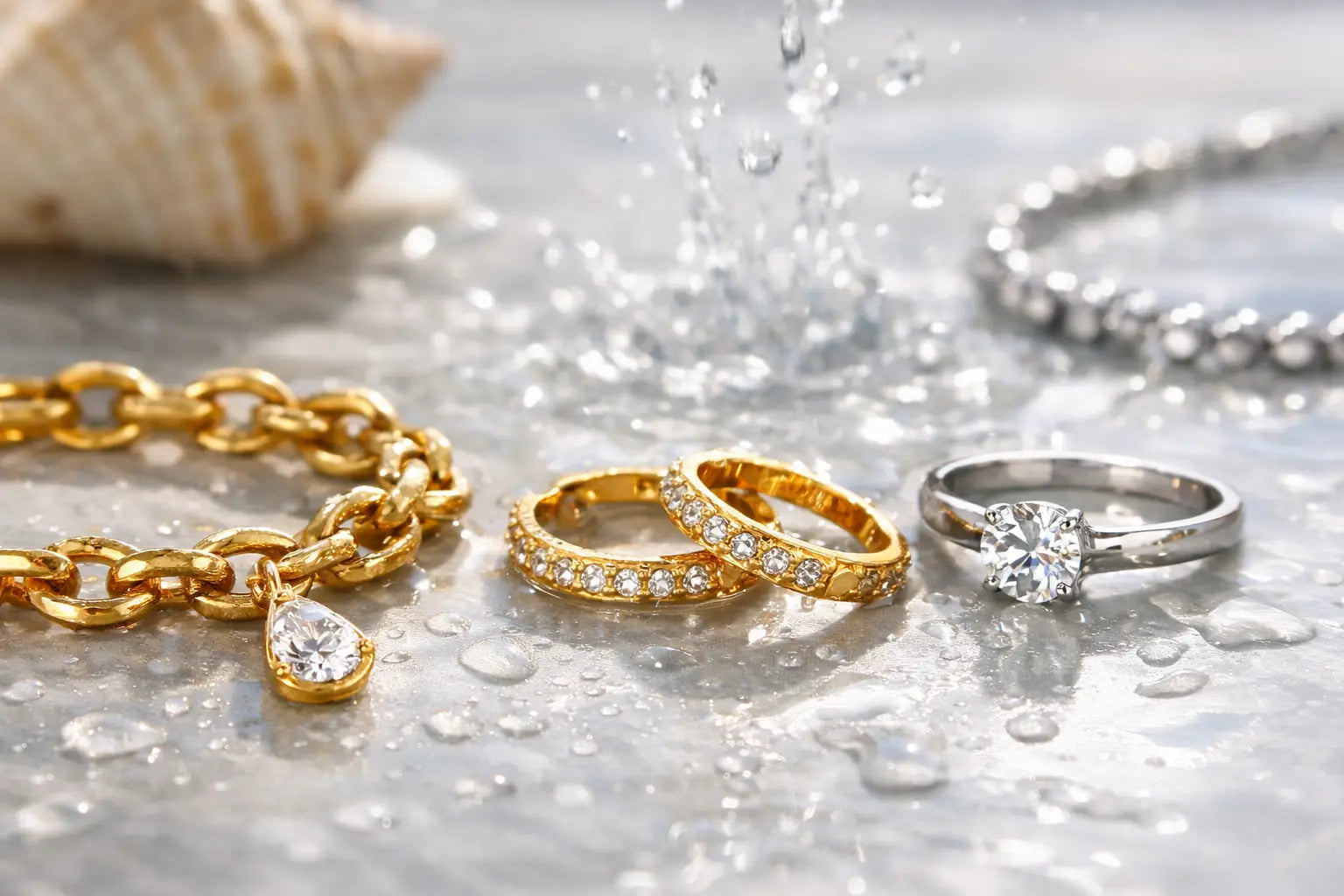
Waterproof jewellery is designed to handle everyday contact with water better than delicate costume pieces, but “waterproof” should not be confused with indestructible. Chlorine, harsh cleaning products and repeated exposure to heavy fragrance can be tough on any finish. Take jewellery off for household cleaning, and rinse away residue if you have worn it in a pool or the sea.
It also helps to apply body lotion, perfume and SPF before putting on your jewellery, allowing each product to settle first. This keeps residue from gathering under rings and chains, where it can irritate skin or dull shine. After a long day, a soft dry cloth is usually enough to remove fingerprints and moisture.
Storage has a quiet impact too. Rather than letting chains tangle at the bottom of a bag, keep pieces dry and separate where possible. A small pouch or compartmentalised box protects finer chains and helps zircon details stay bright. The best jewellery care routine is the one you will actually keep: quick, uncomplicated and easy to repeat.
Style should never require a compromise
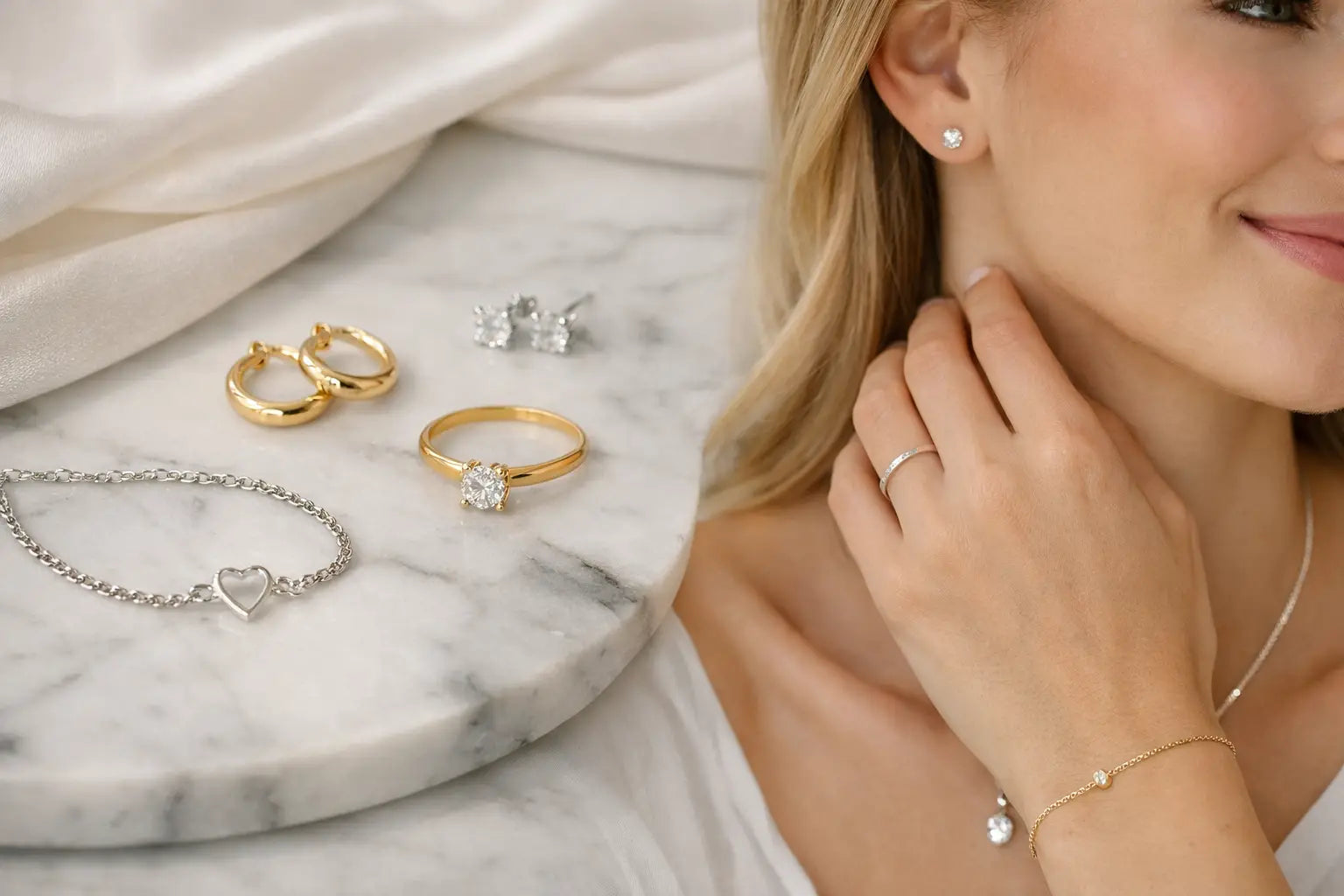
Sensitive skin does not mean settling for plain, purely practical jewellery. The most wearable collections are built around versatile shapes that make styling feel instinctive. A curved open ring brings softness to tailored sleeves. Petite huggies add a clean glow without competing with your hair or neckline. A floral stud, pearl drop or clover motif can make a simple knit feel more intentional in seconds.
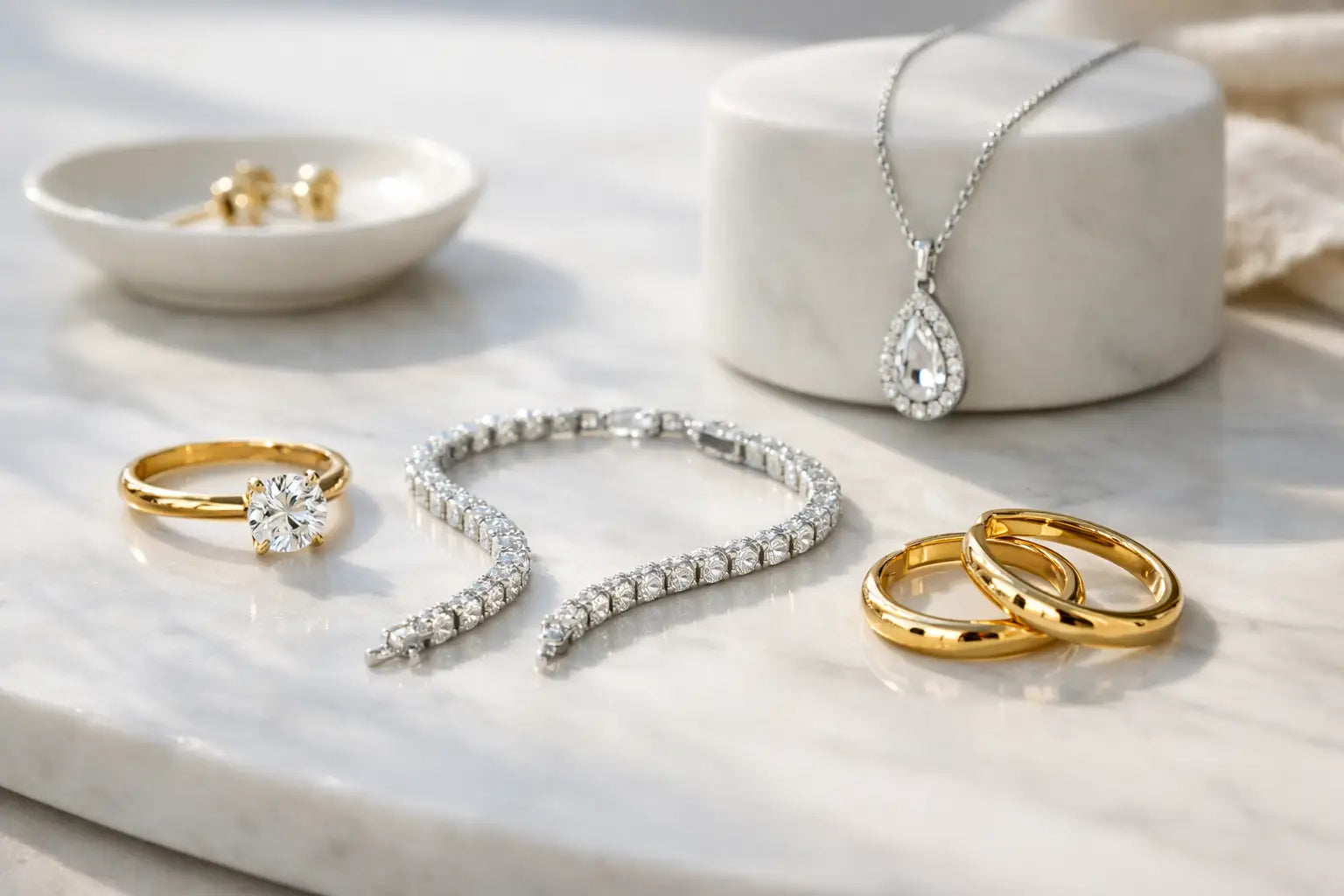
Stacking is especially useful when you want variety without excess. Pair a smooth band with a zircon ring, or layer a fine chain with a slightly shorter pendant. Keep one element as the focal point - perhaps a baguette gleam bracelet or a luminous tennis necklace - and let the rest sit quietly around it. The effect is refined rather than overdone.
There is a financial consideration, too. Fine jewellery has its place, particularly for heirlooms and milestone gifts. But daily jewellery should not need to feel too precious to enjoy. Well-chosen hypoallergenic fashion jewellery makes it easier to build coordinated looks, try new silhouettes and wear your favourites without saving them for one rare occasion.
The right piece should feel like an easy yes when you are getting dressed: kind to your skin, bright in the light and ready to go wherever the day takes you.