316L Steel Versus Alloy: What to Wear Daily
A necklace that looks luminous on Monday but leaves a green mark by Friday is rarely a styling problem. It is usually a materials problem. When comparing 316L steel versus alloy jewellery, the key detail is that these terms are not really opposites. 316L stainless steel is itself an alloy, but it is a specific, carefully formulated one with qualities that make sense for jewellery worn on repeat.
For rings you do not want to remove for handwashing, huggies that sit close to sensitive ears, and stackable pieces that should still look polished after a busy week, the material underneath the shine matters. Here is what to look for before adding a new everyday favourite to your jewellery rotation.
316L Steel Versus Alloy: The Essential Difference
An alloy is simply a metal made by combining two or more elements. Brass is an alloy. Sterling silver is an alloy. Stainless steel is an alloy, too. So, when a product is described only as “alloy jewellery”, it does not tell you enough about what is in it, how it will wear or how it may feel against your skin.
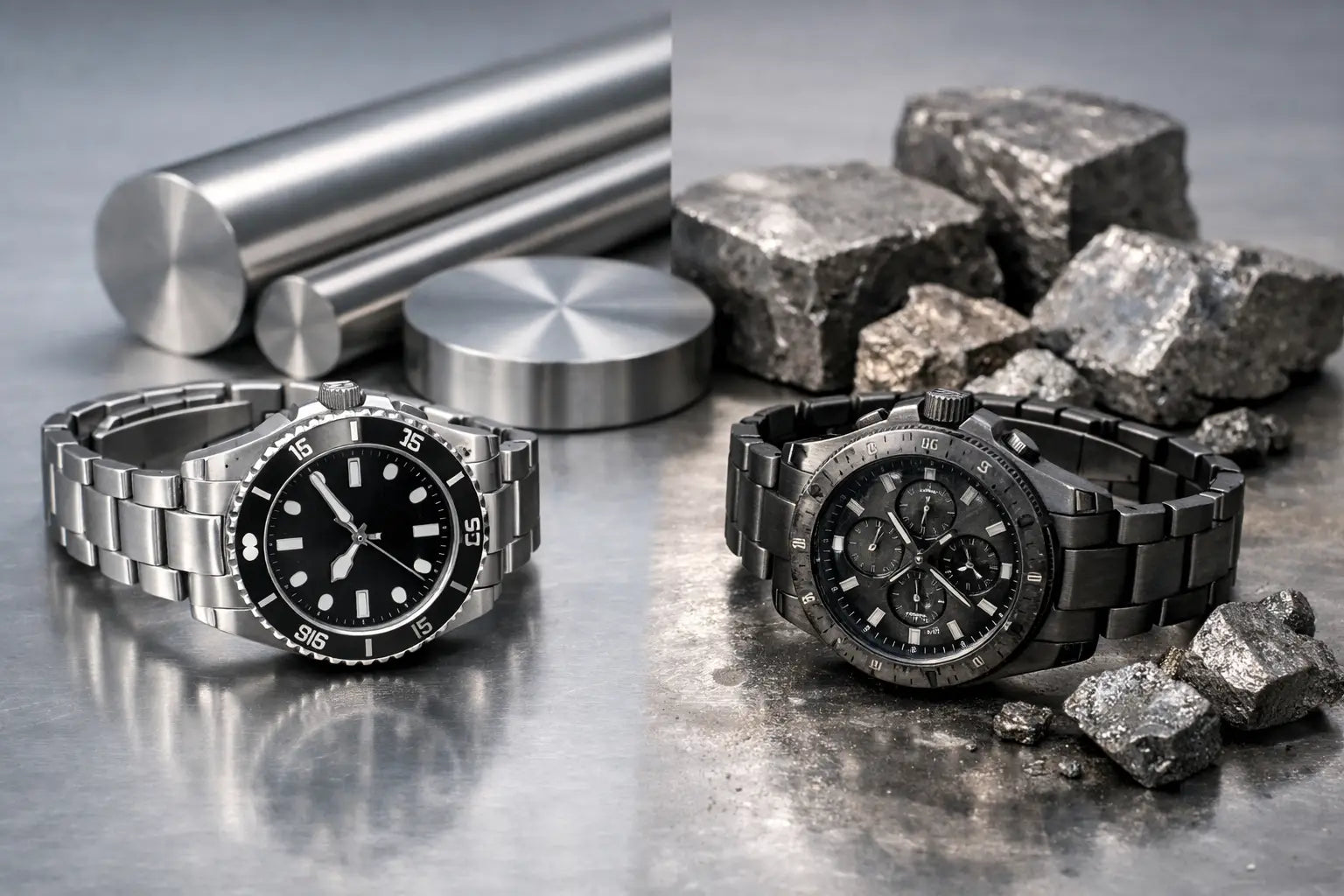
316L stainless steel is a recognised grade of stainless steel. It contains iron along with chromium, nickel and molybdenum, among other elements. This composition helps create a surface that resists corrosion and everyday tarnishing far better than many unspecified base-metal alloys. The “L” refers to its low carbon content, a technical detail that supports its corrosion resistance.
That does not mean every alloy is poor quality. Some are made for specialist purposes, and fine jewellery alloys can be beautiful and long-lasting. The issue is transparency. “Alloy” without further information is a broad label, while 316L tells you much more clearly what material sits beneath your jewellery’s finish.
Why 316L Stainless Steel Suits Everyday Jewellery
The best everyday jewellery should fit around your life, not create another thing to worry about. 316L stainless steel is popular for pieces designed to be worn often because it combines a clean, polished look with reassuring practicality.
It holds up around water
Waterproof jewellery is not a promise that a piece will look identical forever under every possible condition. Chlorine, salt water, perfume and abrasive cleaning products can all affect jewellery over time, whatever it is made from. Still, 316L stainless steel has excellent resistance to moisture and corrosion in normal daily wear.
That makes it a thoughtful choice for the moments that catch other jewellery out: washing your hands, an unexpected downpour, a gym session or getting ready in a hurry. Its low-maintenance nature is especially appealing when you prefer jewellery that feels like part of you rather than something to store away after every outfit.
It is a considered option for sensitive skin
Skin sensitivity is personal. What feels comfortable for one person may not suit another, and anyone with a known metal allergy should always check the full material details before buying. Yet 316L stainless steel is widely chosen for hypoallergenic jewellery because its composition is stable and its surface is less likely to release metal in the way some lower-grade or unknown alloys can.
Moonix jewellery is made with 316L stainless steel and designed to be nickel-free, offering a more skin-friendly option for everyday styling. For earrings, rings and close-fitting chains, that clarity can make all the difference between a piece you admire and one you actually wear.
It keeps its polished finish with less fuss
Unspecified alloy jewellery is often coated to create a gold or silver-toned appearance. If the underlying metal reacts with moisture, sweat or skincare, that coating can wear unevenly and reveal a different colour beneath. This is why some lower-priced pieces quickly lose their fresh-from-the-box look.
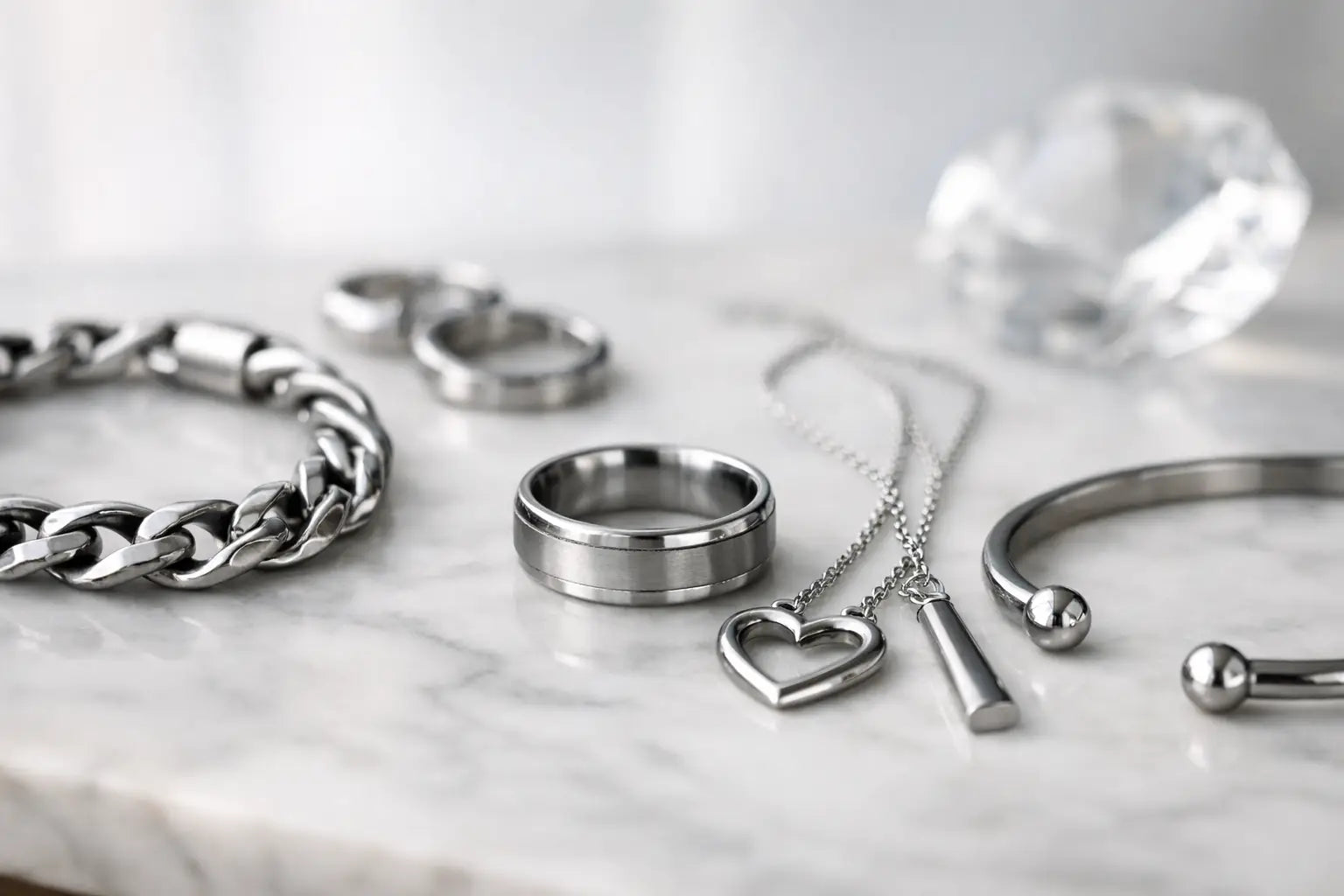
316L steel has a naturally sleek, silvery finish of its own. When it is used as a foundation for gold-toned jewellery, it offers a more durable base than many common fashion-jewellery metals. It will still benefit from simple care, but it is designed for sustained shine rather than one special occasion.
Not All Alloy Jewellery Wears the Same
“Fashion alloy” can refer to many combinations, often including metals such as zinc, copper, brass or tin. These materials make it possible to produce detailed designs at a lower cost, and they are common in trend-led jewellery. They can be perfectly suitable for occasional wear, particularly if you enjoy trying a statement shape for one event or season.
The trade-off is usually durability and skin comfort. Copper-containing alloys may oxidise, leaving a darkened surface or a temporary green tint on skin. Some base metals are soft, so fine details can scratch or bend more easily. If a plating layer is thin, perfume, friction and frequent contact with water can shorten its life.
There is also a difference between a jewellery piece made from a named alloy and one labelled simply “metal alloy”. Brass, for example, has distinct characteristics and can be a lovely material in the right design. But if the listing does not identify the metals, you cannot easily assess its likely wear, colour changes or suitability for sensitive skin.
Which Material Is Best for Your Jewellery Box?
It depends on how you plan to wear it. For a seasonal statement earring that you might wear twice, an affordable alloy can be a fun choice. It gives you access to dramatic shapes and quick trend updates without asking for a long-term commitment.
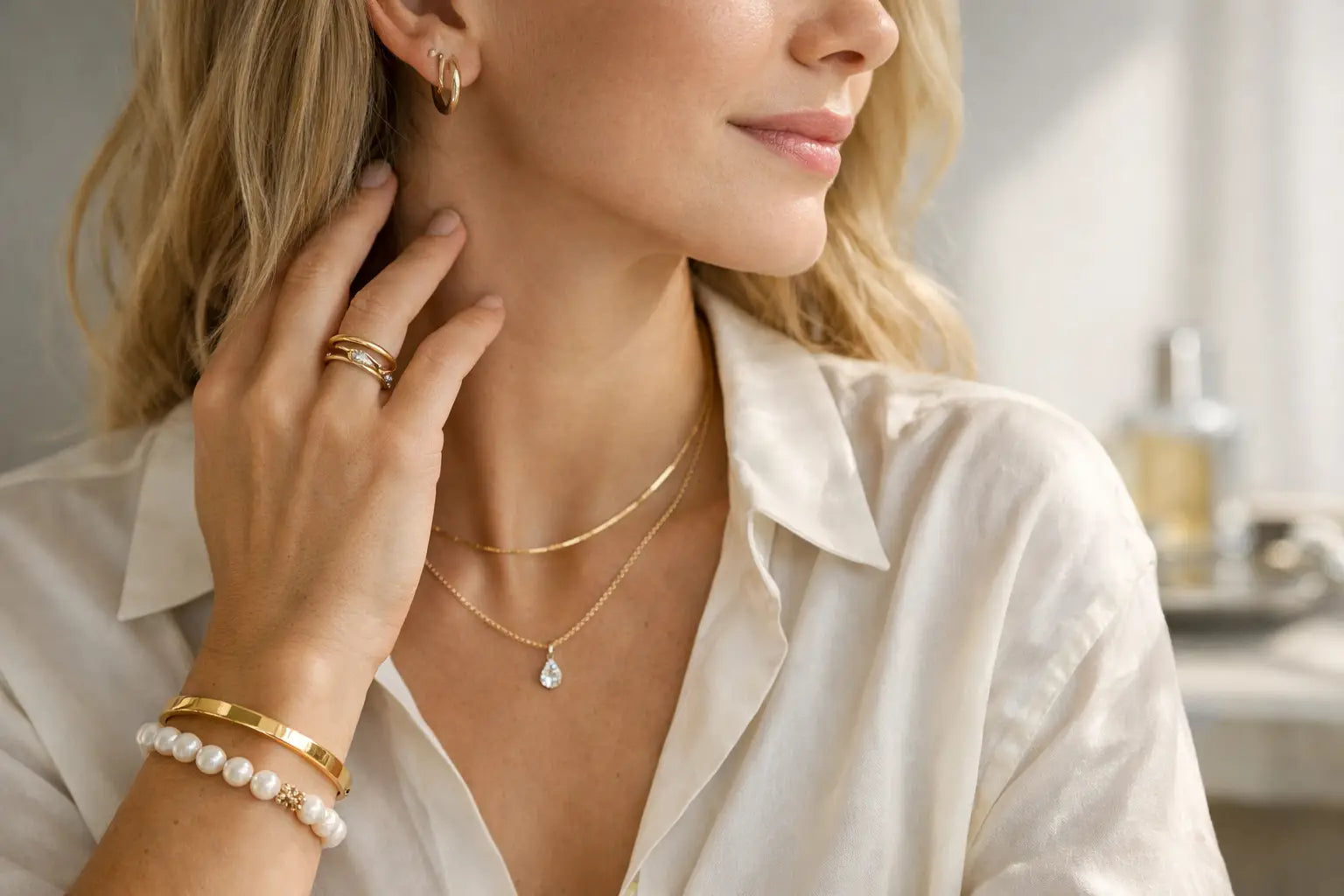
For the pieces that live on your bedside table - your everyday hoops, lucky clover pendant, slim stacking ring or bracelet you pair with everything - 316L stainless steel is usually the more practical investment. You are buying less maintenance, stronger resistance to tarnishing and a better chance of comfortable all-day wear.
This does not mean 316L is a replacement for every jewellery material. Solid gold has its own lasting appeal and value, while sterling silver offers a softer, more traditional lustre. Both can need dedicated care, and both sit at different price points. 316L stainless steel occupies a useful middle ground: polished, dependable and accessible enough to style in multiples.
How to Shop Beyond the Label
A beautiful product photograph cannot tell you what happens when a ring meets hand cream, a shower or the bottom of a handbag. Before choosing jewellery, look past descriptions such as “gold finish” or “alloy” and seek material specifics.
Check whether the base is named as 316L stainless steel, whether the jewellery is described as nickel-free and whether the brand gives clear guidance on water resistance and care. Consider the piece’s placement, too. A pendant worn over clothing faces different conditions from a ring that meets soap and surfaces throughout the day.
Design also plays a part in longevity. Smooth, rounded huggies, polished chain links and secure stone settings tend to suit frequent wear well. Delicate open rings and adjustable styles are wonderfully versatile, but they should be adjusted gently rather than bent back and forth. A little care protects the shape and helps your favourite details stay just as lovely.
Simple Care for Long-Lasting Shine
316L stainless steel does not require a complicated routine. Wipe your jewellery with a soft, dry cloth after wearing it, especially if it has been in contact with sunscreen or hair products. For a deeper refresh, use mild soap, lukewarm water and a soft cloth, then dry it thoroughly.
Avoid harsh chemical cleaners and do not store pieces tangled together, as friction can dull polished surfaces or scratch zircon details. Put jewellery on after perfume and moisturiser have settled, and give especially delicate designs a separate pouch or compartment. These small habits are less about being precious with your jewellery and more about keeping your daily adornments ready for whatever you wear next.
The clearest answer to 316L steel versus alloy is not that one word always guarantees quality. It is that a named, jewellery-suited material gives you confidence to choose with intention. For the pieces you want to wear over and over, a little material knowledge lets the shine feel effortless.